
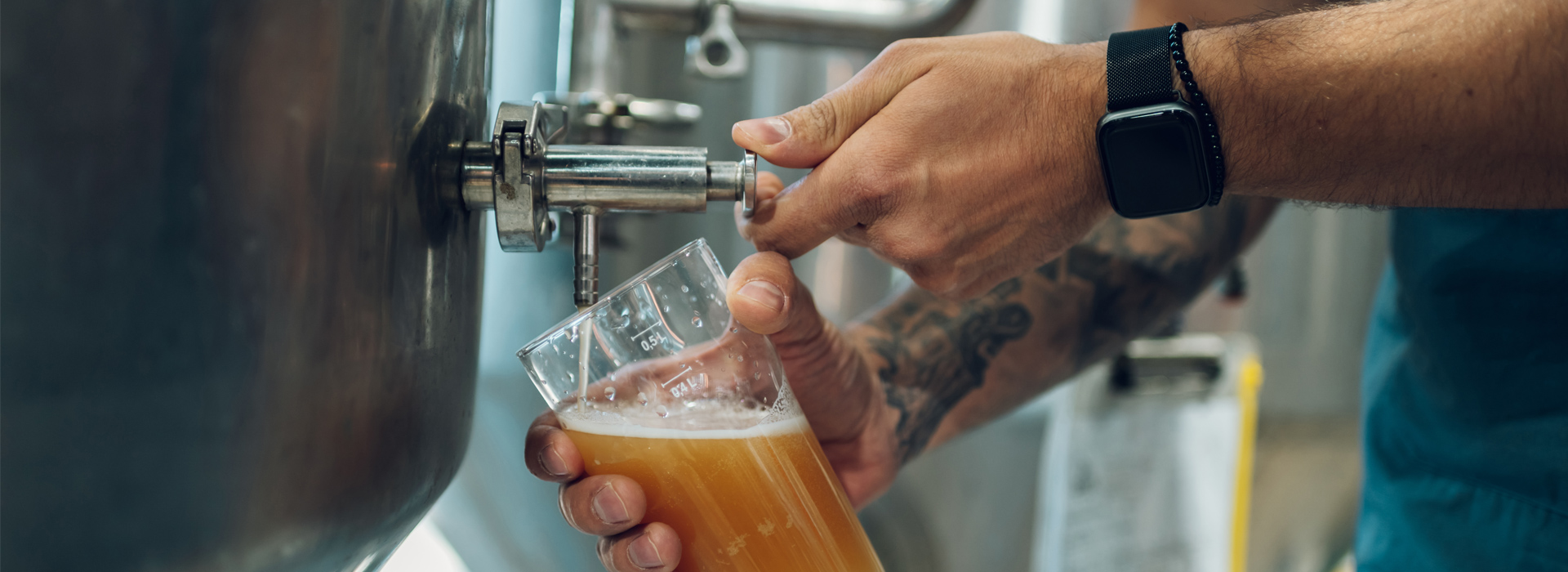
Cheers! Or: How a vacant jewel is given new life.
What it takes for an abandoned listed building to become a new urban attraction is demonstrated in Zeulenroda-Triebes.
In Zeulenroda-Triebes, the Stadthöhler is being transformed through a great deal of commitment and courage into a brewery and holiday apartments of a completely different kind.
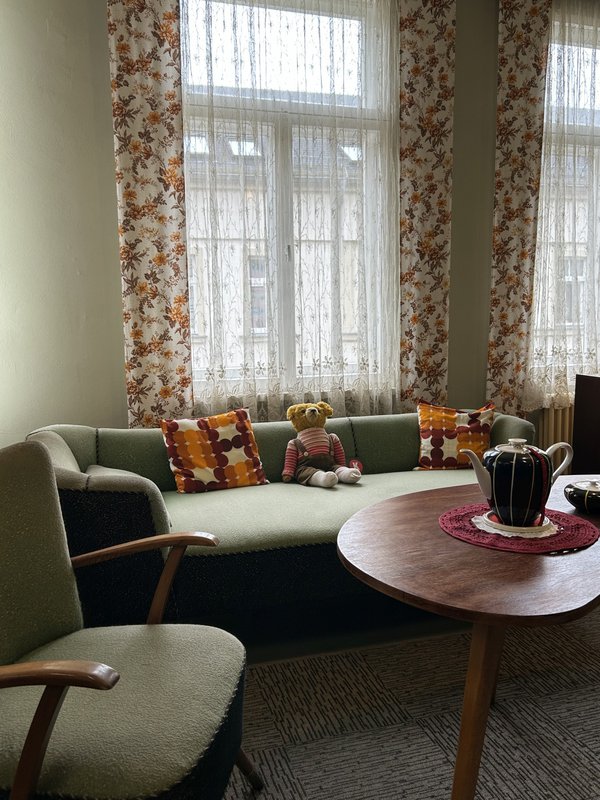
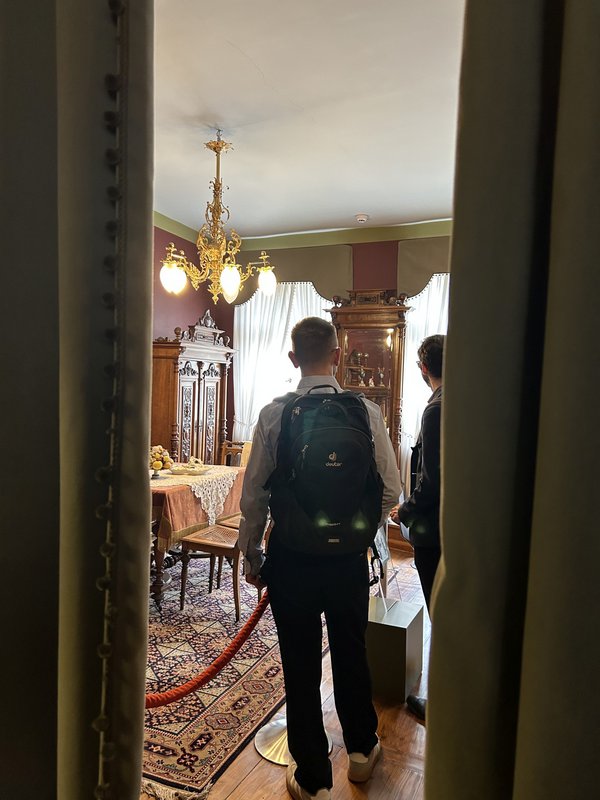
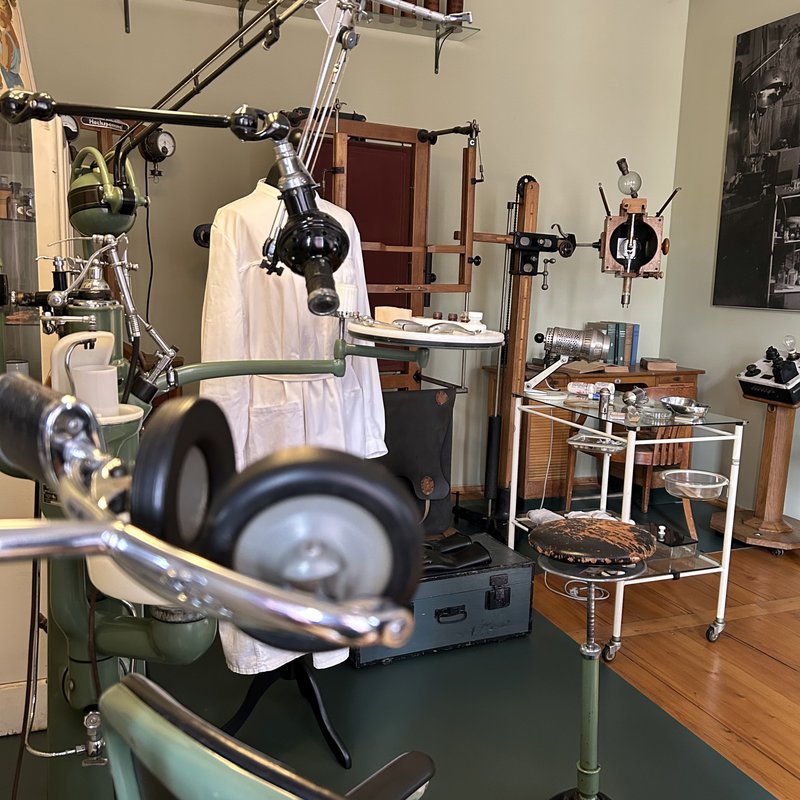
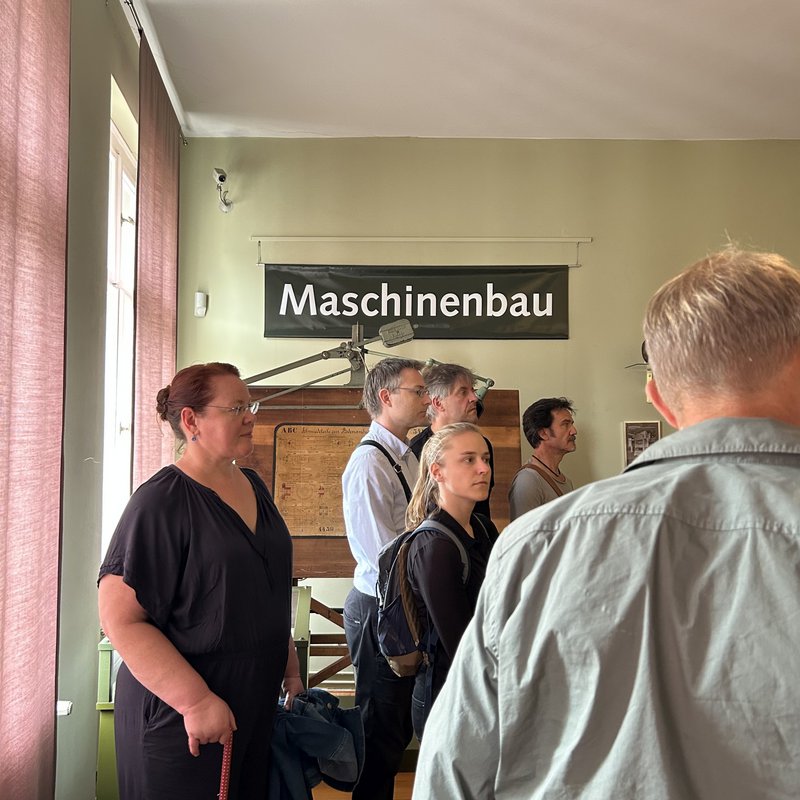
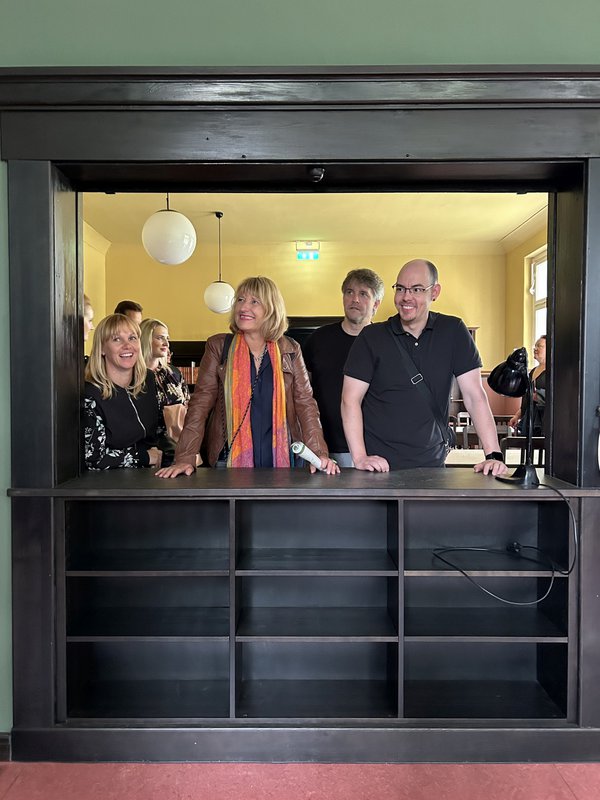
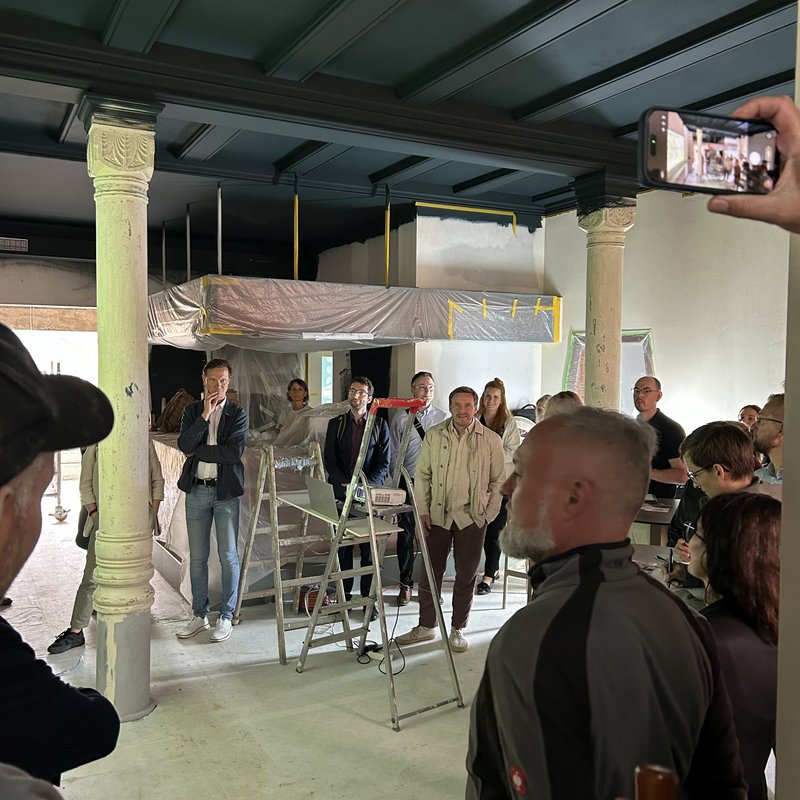
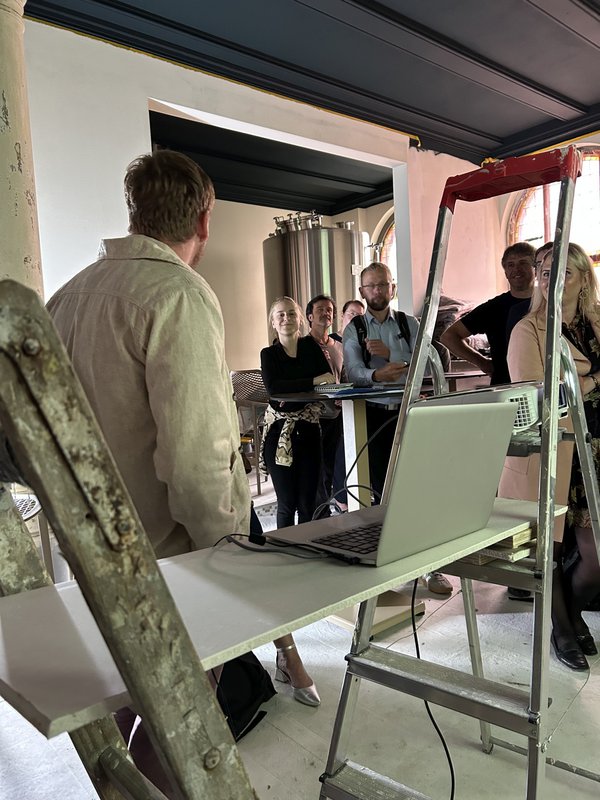
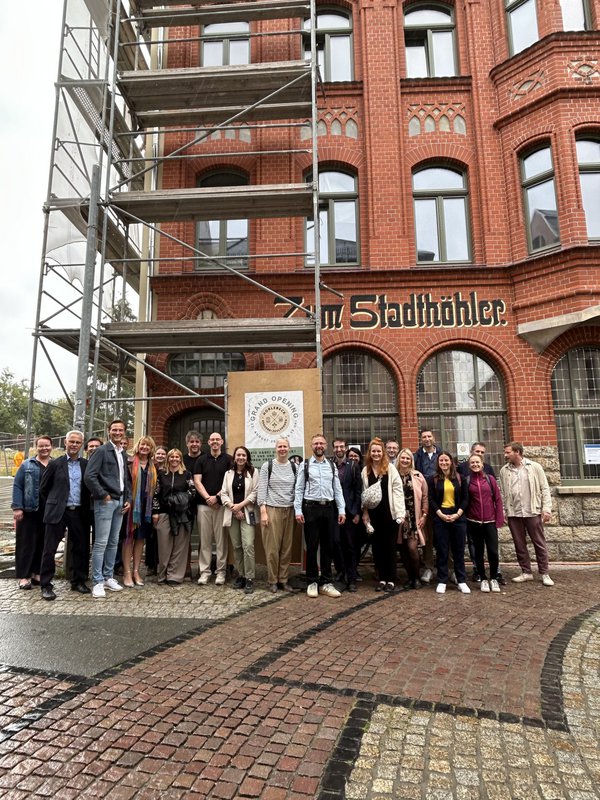
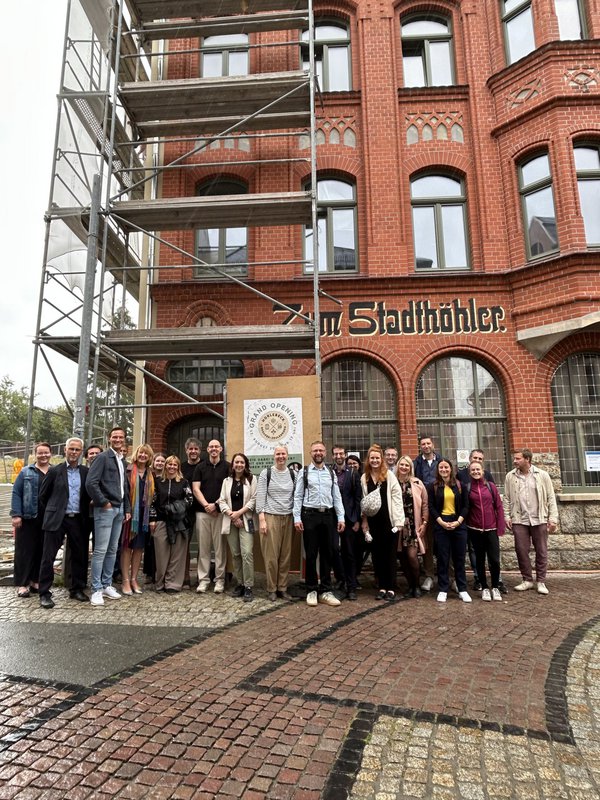
Not all scaffolding has been removed yet, and some walls or the interior are still unfinished when participants of the Thuringian action alliance “Innenstädte mit Zukunft“ curiously poked their heads into the individual floors of the Stadthöler in Zeulenroda at the end of August: But even at that point, it was evident on almost every corner with how much passion and creativity people here are working to revitalize an old building and return it to the city as a space for activity and encounter.
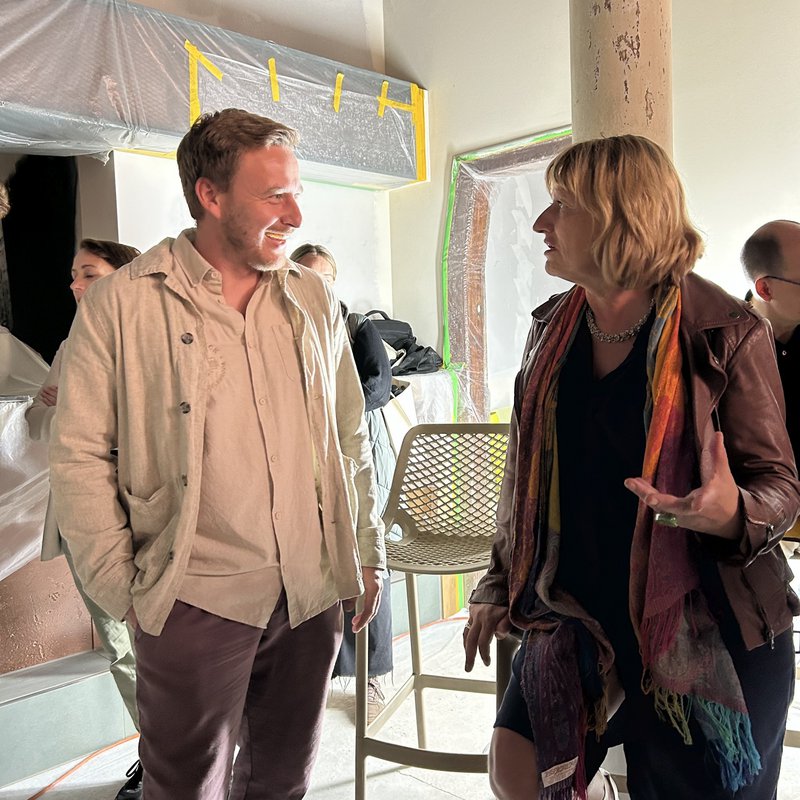
Organized in the cooperative “Horlebeck Brauerei Zeulenroda eG”, Toni Heinrich, Bastian Militzer, Thomas Bergner and their colleagues have not let themselves be discouraged despite bureaucratic hurdles and complex funding processes involved in transforming the old Stadthöler building, and have stuck with the project over the past years. “You need to be patient; projects like this act as a beacon and can also be pioneering for projects in other Thuringian towns to counter vacancy and decay in city centers,” explains Denis Peisker from the office of the city center alliance. The building on Greizer Straße will thus house a brewery, holiday apartments, and additional rooms that can be used for events in the town. “Our city center has changed: more and more pubs, shops, and restaurants have had to close. It has become quieter in Zeulenroda because people found fewer and fewer places where they could meet away from their own four walls. What was once the heart of our urban community life is now often deserted. We want to change that with the renovation of the Stadthöler and create a framework in which urban life is possible,” states Toni Heinrich as co-initiator of the cooperative. At the same time, it is a concern of the cooperative to share their experiences, thereby encouraging similar projects and, where possible, protecting them from pitfalls in the revitalization of a vacant building through transparent exchange.
We greatly appreciate this from the action alliance: Despite a tight schedule, the cooperative members gave 23 participants of the working group “Living and Housing“ insights during the project day and thus shared their knowledge with other Thuringian stakeholders.
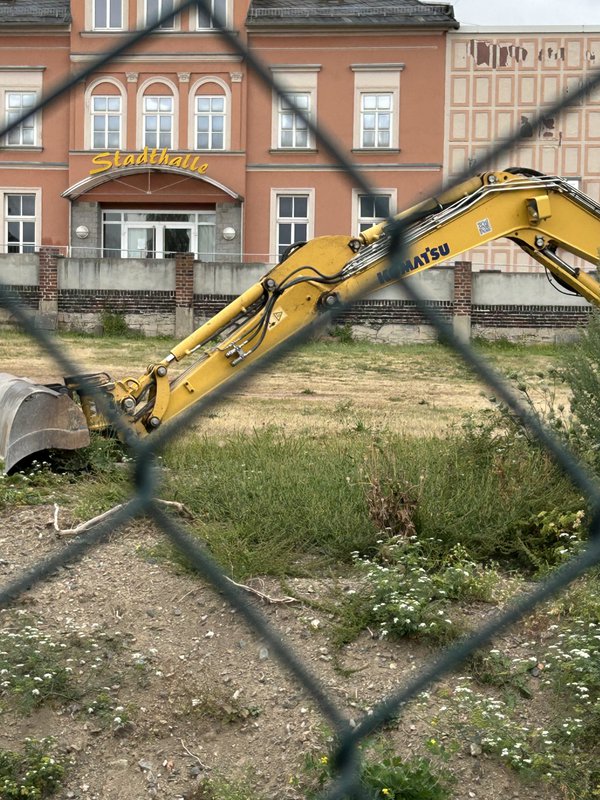
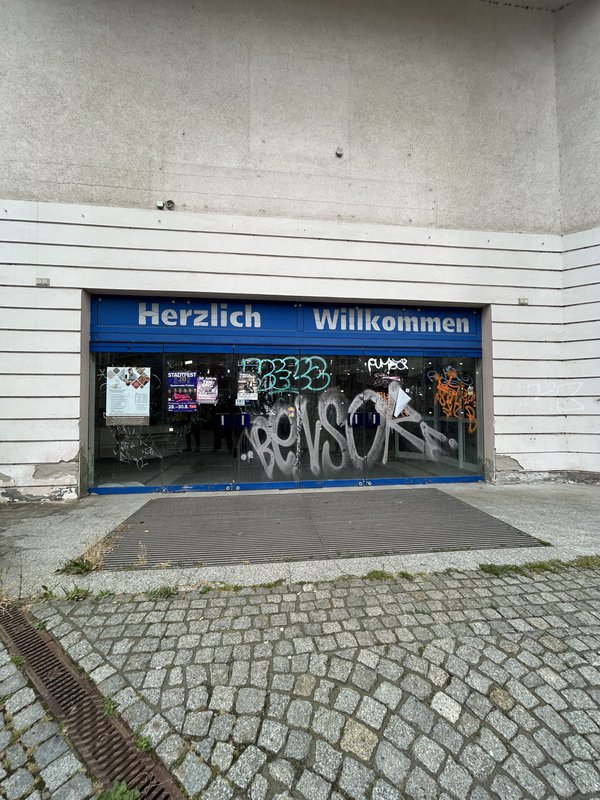
It was not only the Stadthöler project that impressed during the project day in August: The tour through Zeulenroda, passing problem areas such as the shopping arcade at the market and the WEKA department store, made it clear where the challenges for city centers generally lie and where ideas, but also support, are needed. This is precisely to ensure that unconventional approaches also have the chance to reach their goal: such as the city's Dreieinigkeitskirche. As a cultural space, thanks to the association "VIVA Kulturforum Kreuzkirche e.V.“, it is now used, contrary to its purely original purpose, for readings, cinema evenings, puppet theater, and even rock concerts. It thus offers young and old another meeting point where urban life and coming together are possible.
Project day: Walking tour through the city center of Zeulenroda-Triebes

Who is the Thuringian Action Alliance “City Centers with a Future“?
Making Thuringia's city centers viable and attractive is, in the truest sense of the word, a "central" concern of politics, business, and society in the Free State. Diverse tasks arise from current trends, including structural change in retail – especially the dynamics of online trade – as well as demographic change, climate change, and the consequences of the Corona pandemic. Networked action and future-oriented solutions are called for here. The action alliance, whose office is located at LEG Thüringen , now unites around 100 actors from municipalities, business, retail, culture, and civil society. Together they work to make city centers lively, resilient, and future-proof. In view of structural change, vacancy, climate change, and demographic shifts, this is a task of enormous importance.
The alliance sees itself as a strategic communication and exchange platform. The thematic work is carried out primarily in three working groups that address central challenges for downtown development. They focus on the three thematic areas of climate, vacancy management, and living and life in the city. In the working groups, members exchange ideas, share experiences, and work on model projects, pilot projects, and innovative approaches intended to strengthen city centers. In regular meetings – members discuss central topics such as digitalization, demographic change, and the future of brick-and-mortar retail, and develop them strategically.
Comments
no comments available
Write a comment
Author