
Holistic approaches to optimizing integrated energy management
Published: November 2025
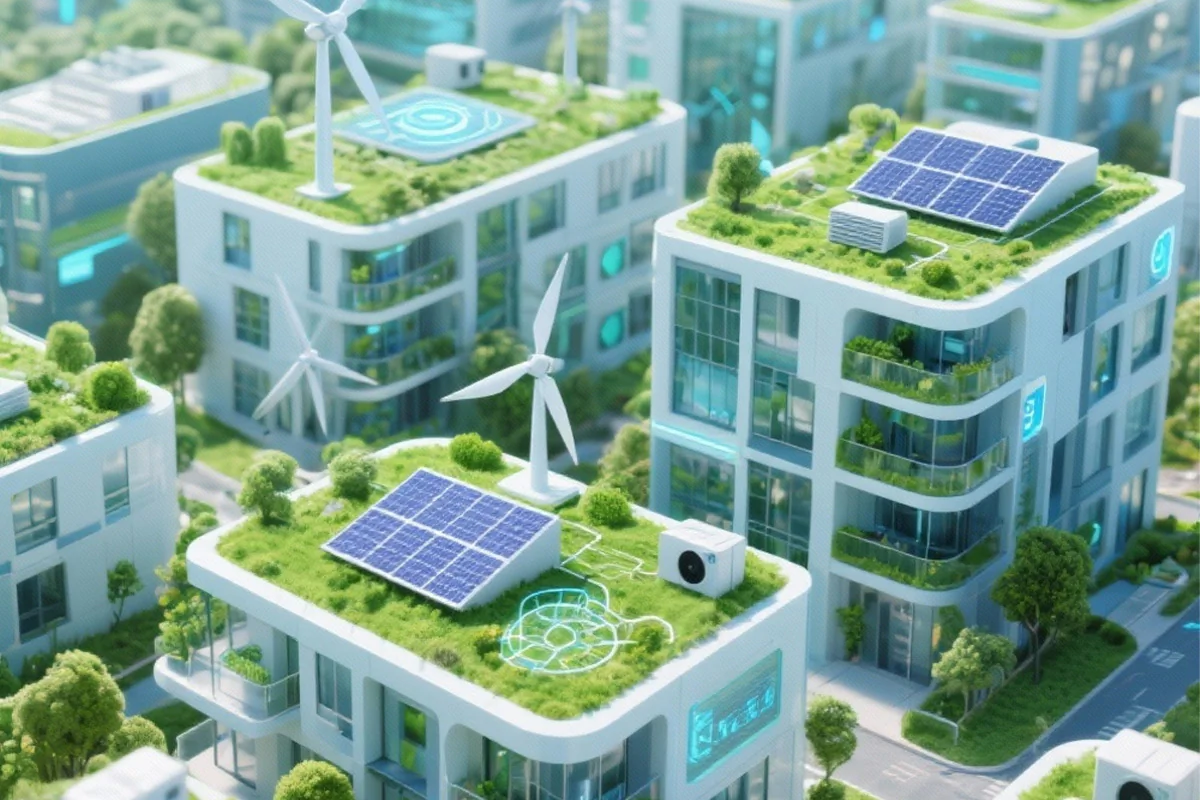
Holistic approaches to optimizing integrated energy management rely on innovative technologies such as energy storage (e.g., compressed air systems) and the multiple conversion of various energy forms to maximize energy efficiency and sustainability. Through synergistic concepts that combine CO₂ reduction, data analysis, 3D city models for photovoltaic potential assessment, and energy-efficient renovation, these approaches strive for nearly self-sufficient systems and microgrids to promote independence and sustainable energy management. This requires extensive and interconnected information – from consumption data and building structures to regional grid capacities. Providing such data requires innovative IT solutions that create the necessary transparency and enable informed planning for integrated energy management systems.
Guiding questions
- How can the potentials of different forms of energy be bundled in a flexible system to minimize energy losses?
- Which technologies are most promising for scalable and sustainable energy storage in integrated systems?
- How could storage be anchored in urban planning and infrastructure to offer maximum flexibility and availability?
- How can the efficient use of real-time data optimize CO₂ management of buildings and urban infrastructures?
- How can energy systems be designed to be resilient to external crises while ensuring a flexible supply?

Download
Holistic approaches to integrated energy management
(Document is not barrier-free)
Holistic approaches to integrated energy management
Your contacts