
AI, IoT and modeling technologies for agriculture, environmental monitoring and resource management
Published: November 2025
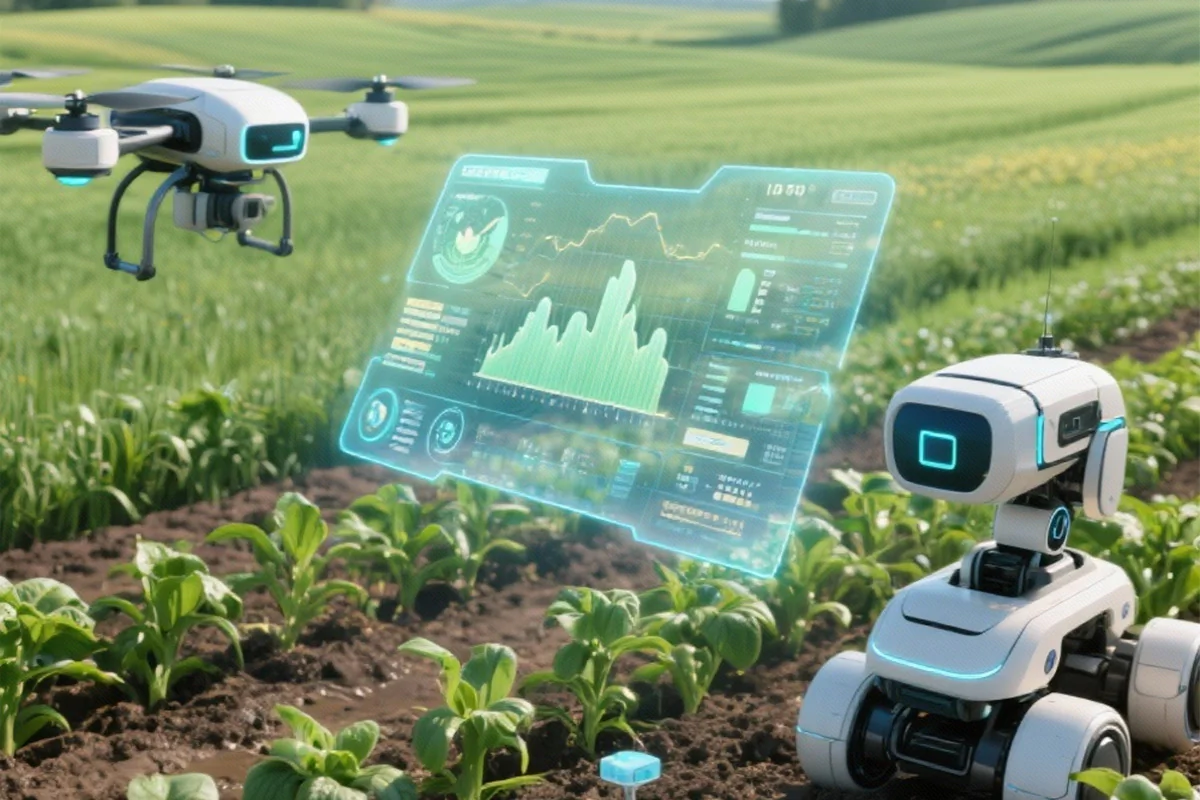
AI, IoT, and modeling technologies for agriculture, environmental monitoring, and resource management leverage deep learning, the IoT, and machine learning to precisely analyze environmental conditions, make agricultural processes more efficient, and predict natural hazards at an early stage. These technologies offer innovative ways to optimize resource management in agriculture, water and energy supply, and nature conservation. They not only enable adaptation to specific geographical and climatic conditions but also increase efficiency and sustainability in various sectors. Through the precise collection and processing of data, farmers can, for example, specifically optimize the use of water, fertilizers, and pesticides. Similarly, IoT-based sensors and AI models help monitor and adjust water and energy consumption in different environmental and industrial scenarios.
Guiding questions
- How can natural disasters and extreme weather events be better predicted and managed using predictive AI models?
- What could future infrastructures for early warning systems and crisis management look like? In which areas can the use of water, energy and pesticides be optimized through precision agriculture technologies?
- What are the long-term ecological impacts of using digital technologies in natural areas?
- To what extent can AI and IoT be tailored to local conditions, and what does this mean for country-specific agricultural and environmental strategies?

Download
AI, IoT, and modeling technologies for agriculture, environmental monitoring, and resource management
(Document is not barrier-free)
AI, IoT, and modeling technologies for agriculture, environmental monitoring, and resource management
Your contacts