
There are many good ideas. But how do they become successful innovations?
How open innovation helps to scale innovations and create new partnerships.
Clever ideas emerge every day in companies, universities, and research institutions. However, there is often a long path between the idea and a market-ready development. Frequently, there is a lack of feedback, application partners, visibility, or funding opportunities.
Open innovation is a valuable and systematic complement to classic research and development, in which actors are traditionally only involved in the late stages. The basic idea behind it is simple: instead of driving developments predominantly within one's own organization, external actors are additionally involved at an early stage. These include customers, companies, research partners, investors, or even interested citizens. The idea behind it: those who receive early feedback, incorporate different perspectives, and involve potential users develop solutions that better meet needs while simultaneously reducing innovation risk.
How to take this path and for which topics Open Innovation is suitable was the focus of our InnoPRO on 18.08.2026: „Exchange – effectively scaling research and innovation“. The Fraunhofer Institute for Systems and Innovation Research (ISI), which has developed a digital platform to make this method viable in Germany, was represented with its expertise. In addition, the Stifterverband and the Friedrich Schiller University Jena gave presentations on collaborative innovation processes and matching platforms to turn ideas into collaborations and applications more quickly.
For those who are not yet familiar with our format: With the InnoPROs, we bring business and science to the same table. The goal is to jointly develop new ideas, exchange knowledge, and make innovation potential visible.
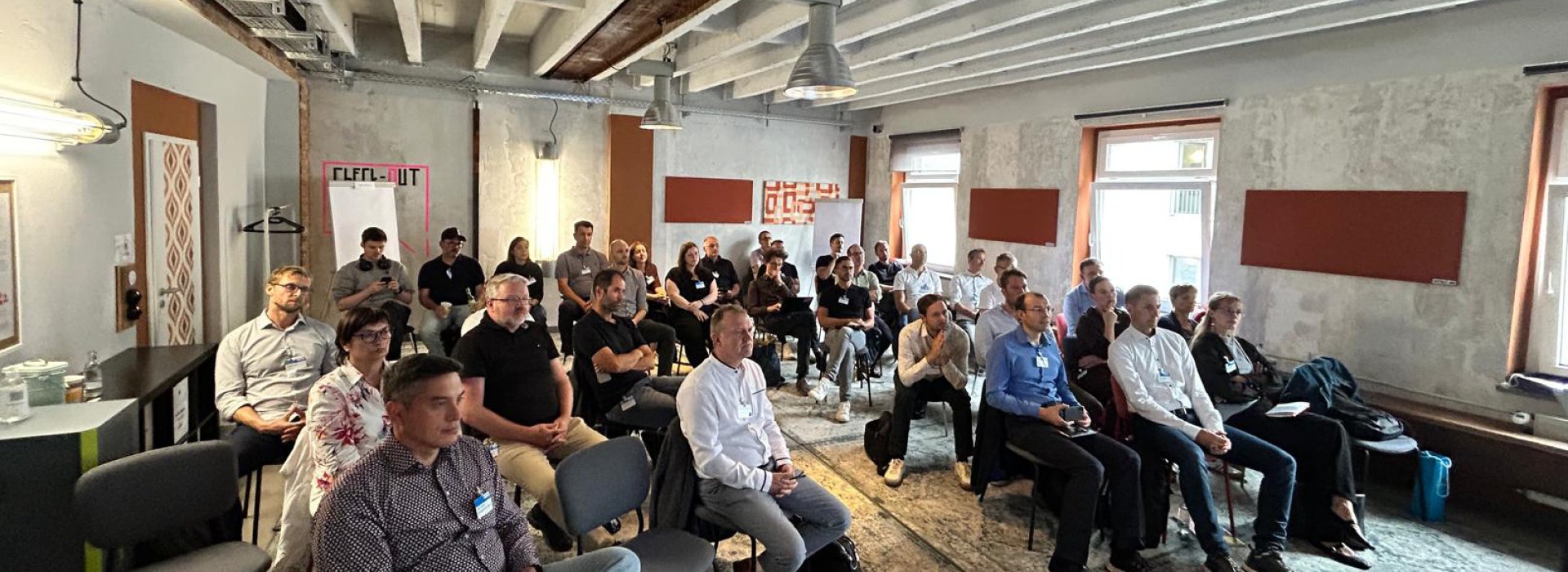
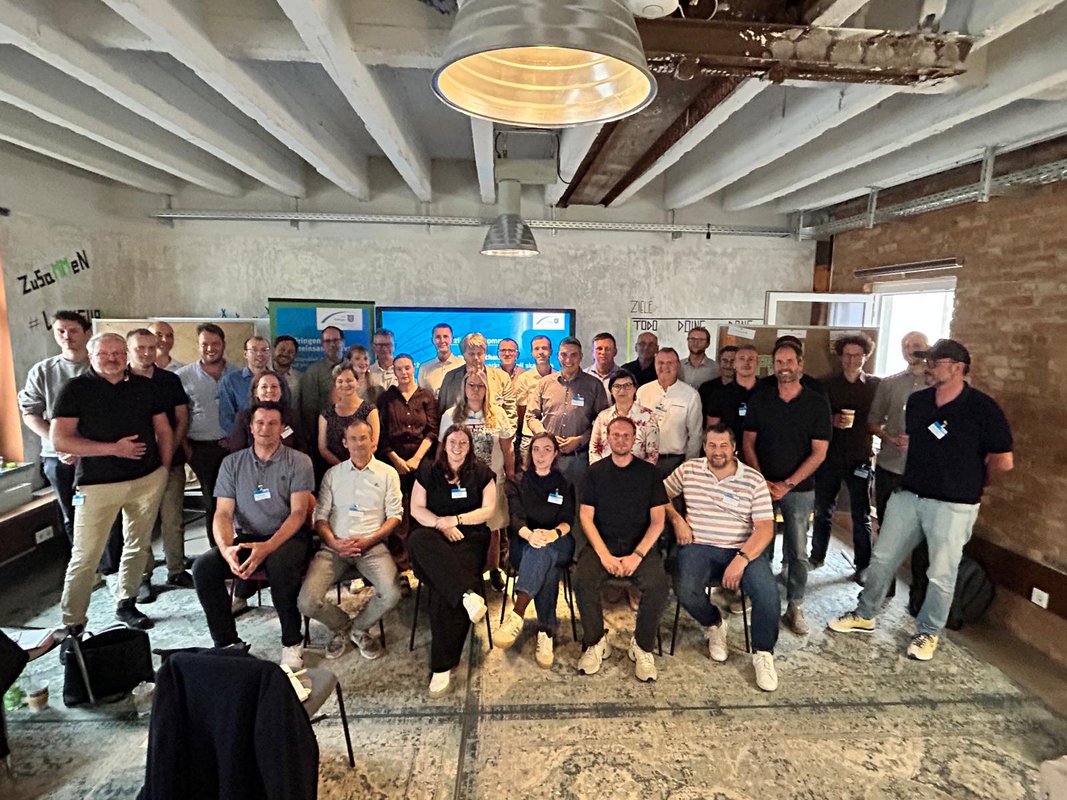
The topic seemed to strike a chord, as the room at the Krämerloft in Erfurt was filled to the last chair with representatives from science, companies, and start-ups who were looking for new ways to approach innovation processes.
Also: How can Open Innovation help bring research and innovations into application faster?
Europe has many good ideas. But what happens next?
It became clear right from the start that innovation and the fight for technological supremacy do not work the same way everywhere in the world. In Europe, innovation is still strongly driven by scientific excellence, talent, and high quality standards, and less by the market (see Figure 1). The problems with this approach became evident over the course of the event: innovation begins with an idea, but also with many hurdles; results often do not reach the market, ideas get stuck, or they lack a connection to reality. In contrast, China is deliberately building technology markets through massive investments; the USA combines technological excellence with capital and entrepreneurship.
The central message is therefore: The decisive question is not only who has the best ideas. What matters is which innovation ecosystem develops the fastest scalable value creation from them.
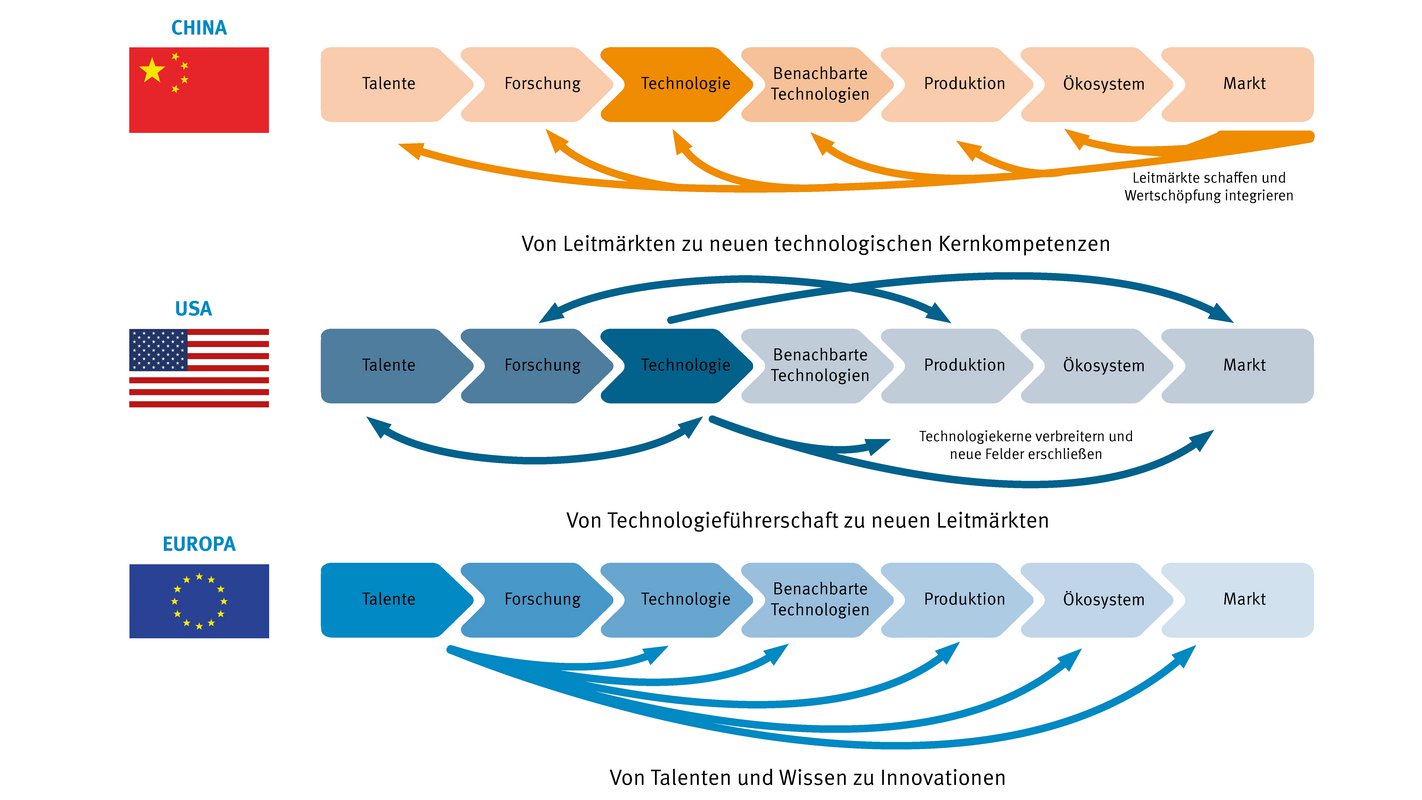
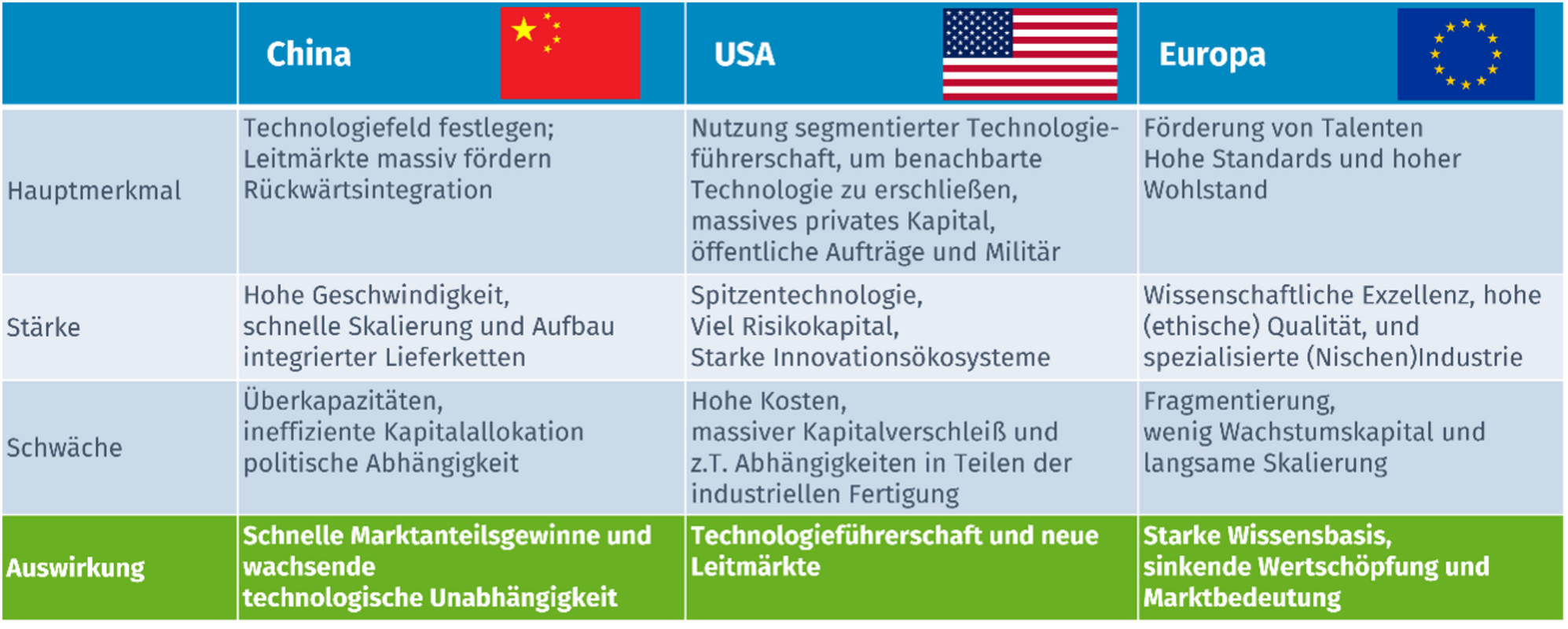
A comparison of the three countries or regions (see Figure 2) yields a relatively clear picture: China and the USA are currently particularly good at rapidly scaling innovations, opening up new technology fields, and turning them into market success. Europe, on the other hand, often takes responsibility earlier for sustainability, security, data protection, and societal impacts. This is sometimes seen as a disadvantage because it makes developments more expensive or slower.
Especially in the course of the transformation of global innovation ecosystems, this responsibility should not be understood primarily as a competitive disadvantage, but as a strategic development path. It offers Europe the opportunity to take a leading role in selected technology fields and to differentiate itself through trustworthy, sustainable, and socially accepted innovations.
Use crowd innovation as a tool of open innovation:
Crowd Innovation is a tool of Open Innovation. The goal is to involve many people in innovations, with their expertise, but also as funders for projects ("Crowd Funding“).
In this context, the Fraunhofer ISI presented its Crowd Innovation Platform This is not just a digital platform, but a methodologically accompanied process with which external actors are specifically integrated into innovation and transfer projects.
For this purpose, Fraunhofer ISI uses so-called Innovation Challenges. Organizations can submit specific questions to the platform and obtain targeted feedback from different target groups. Depending on the objective, open formats with a broad public or closed challenges with selected professional communities, industry partners, investors, or scientific networks can be carried out.
The offer is aimed at companies, start-ups and spin-offs, research institutions, as well as funding providers, foundations, and public institutions. Associations and interested citizens who wish to actively participate in innovation processes are also addressed.
Companies can validate new applications, products, and business models and gain a better understanding of their target markets. Research institutions have the opportunity to find application partners for their research results and accelerate their transfer into practice. Funding providers, foundations, and public institutions can address societal challenges together with relevant stakeholders. At the same time, the offering gives associations and citizens the opportunity to contribute their experiences, perspectives, and needs to the development of new solutions.
What are the biggest challenges for participants? A look at the discussion
It became particularly exciting in the subsequent exchange between research institutions, companies, foundations, start-ups, and transfer actors. At the core was this question: How can we quickly turn technical possibilities into marketable products and necessary pilot projects, and obtain the necessary capital for this?
Research seeks applications, companies seek solutions
Many research institutions have promising technologies and excellent scientific results, but often have difficulty finding suitable application partners at an early stage and realistically assessing market potential or adequately bridging scaling costs. Therefore, there is a growing need to reflect the “right” research projects with potential users, practice partners, and the market already in early development phases. Especially for technologies at technology readiness levels TRL 5 to 7, questions of validation, piloting, and financing play an important role. Crowdsourcing can support this by providing early feedback on use cases, user requirements, and market opportunities.
Companies want to better understand needs
On the company side, the focus was less on the development of new technologies and more on the question of pilot customers. For example, discussions were held on how product strategies can be developed more systematically and how it can be determined at an early stage whether a relevant market even exists for new products or services.
A concrete example was the consideration of offering a more precise weather radar as a product or service. Before significant development resources are invested, the crucial question arises: Who actually needs this solution and what specific added value would it provide? Open innovation approaches enable exactly this form of validation by involving potential users at an early stage.
Start-ups often stand between technology and the market
In start-ups and spin-offs, the problem is often not the technology itself, but prioritizing the right application. Many young companies have innovative technological solutions, yet face the question of which problem should be solved first with them.
Make research more visible and bring it into application faster with the help of strong partners and matching platforms
Another topic of the afternoon was the discussion about a possible research matching platform. The basic features of the idea of a trusted data center already emerged during the foresight process 2026 and were now to be further developed together. The goal is to bring research results, companies, users, and implementation partners together much faster. Because suitable solutions often already exist. They just do not find the right partners or the innovation ecosystem.
A matching platform that integrates existing solutions from other research projects could serve as a central interface here. Research institutions would have the opportunity to make their results and competencies more visible, while companies could specifically search for solution approaches to concrete challenges. At the same time, potential users, investors, and development partners could be involved at an early stage. This could accelerate innovation processes, avoid duplicate developments, and make research funding more effective.
The discussion made it clear that the success of such a platform does not depend solely on the technical infrastructure. Equally important are trustworthy framework conditions, transparent data and access rights, appropriate handling of IP rights, and an active network that promotes exchange between science, business, and society. Scientists are generally willing to present their results, and technology companies are always looking for something new, but it must be intuitive and ultimately personal. The platform can significantly facilitate the initial Contact and the initial matching. However, the actual collaboration still arises through personal exchange and the building of trust between the actors involved.
Our conclusion
The intensive discussion has shown that this event should be continued. Thuringia has strong research and innovation competencies and ideas; however, there is a lack of opportunities to transfer these more quickly into applications and value creation. Crowd sourcing, crowd funding, and matching platforms can be important tools in this regard. They help to make market needs visible at an early stage, to win new partners, and to further develop innovations together.
Comments
no comments available
Write a comment
Author