

InnoVIEW: Biobased innovations for SMEs – INNOVENT in profile
A conversation with Dr. Bernd Grünler, Chairman and Managing Director, and Sabrina Hauspurg, Head of Biomaterials, about opportunities, challenges, and the role of Thuringia in the bioeconomy.
A conversation with Dr. Bernd Grünler, Executive Board Member and Managing Director, and Sabrina Hauspurg, Head of Biomaterials, about opportunities, challenges, and Thuringia's role in the bioeconomy.
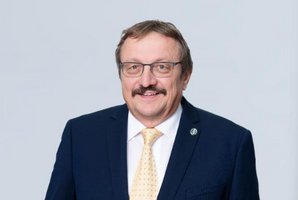
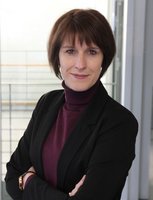
INNOVENT is one of the leading industry-oriented research institutions in Thuringia. What are the origins and current focal points of your institute?
Dr. Grünler: INNOVENT was founded in 1994 with the aim of offering highly qualified academics new perspectives after the reunification. From a non-profit association, a high-performance research institute emerged that today employs around 130 people. The institute's origins lie in surface technology. In the following years, we expanded our spectrum: on the one hand, magnetic materials and optical systems – this know-how came to us from the Leibniz Institute for Photonic Technologies e. V. (IPHT) at the end of the 1990s. At the same time, the biomaterials area was also established through federal funding. These three focal points still exist today.
What role does the bioeconomy currently play in your strategic orientation and the research activities of INNOVENT?
Hauspurg: The bioeconomy has gained strong strategic importance for us and came into focus with the takeover of the department three years ago, because as an institute we are increasingly dealing with issues that go beyond biomaterials for purely medical material development. The bioeconomy opens up more complex fields of application for us– from packaging to the use of residual materials and addresses central societal goals: sustainability, resource conservation, climate protection and ultimately also the preservation of health. As a research institute close to industry, our developments are strongly market-oriented. In addition to our medical research work, the topics of the bioeconomy often offer a significantly shorter time span on the path from idea to marketable product than in medicine, even if, of course, regulatory hurdles exist here that need to be overcome and can be time-consuming.
Dr. Grünler: As an institute with close ties to the economy – especially SMEs – we continuously monitor technological developments and market trends. In doing so, we specifically look for topics with long-term potential where we can build stable, sustainable collaborations. The bioeconomy has become a strategic focus for us because it offers enormous opportunities. Usable by-product streams and bio-based alternatives can be identified everywhere and hold great potential. Furthermore, we are aware of our responsibility towards current and future generations and want to actively contribute here.
How do you at INNOVENT define the term bioeconomy – and what motivated you to engage so publicly with the topic, for example as a co-organizer of the InnoMEET “Bioeconomy meets Production Technologies”?
Hauspurg: At INNOVENT, we understand bioeconomy as the development of biobased and biodegradable materials, the use of sustainable and renewable raw materials, as well as the application of biotechnological processes for material development. We do not cover the entire value chain, but create innovative materials that integrate as well as possible into closed material cycles.
To transfer the bioeconomy from academic research towards application-oriented research, we have been looking for partners from SMEs, industry, and research from the very beginning. Because new materials must also be industrially feasible. That is why we want to involve machine builders and users at an early stage.
Dr. Grünler: Our public engagement – such as at the InnoMEET by Innovativ Thüringen – enables us to open up new markets and project partners. Not least, we can make research visible in this way. This creates understanding and acceptance, especially for young generations, as well as new perspectives for our work.
What current bioeconomy projects are you working on – and are there already concrete biobased processes, materials, or applications being tested in practice or used industrially?
Hauspurg: We are currently managing several bioeconomy projects, all of which have started in the last three years. Currently, we are working on a project on microalgae, in which we are investigating silicates, among other things, for cosmetic applications. We are also conducting intensive research on bacterial cellulose, which is already used in medicine, among other fields. The focus of the project is to make production more economical and scalable. Another topic we are working on is the development of biodegradable adhesives.
As a rule, the first practical testing takes place with the partner in the joint project – for example in the form of field trials. A direct market entry is rarely possible immediately, as numerous regulations and economic hurdles exist. Because even in the bioeconomy sector, the path to the market is challenging.


What typical challenges do you experience when transferring research results into industrial applications?
Hauspurg: In principle, the laboratory experiment is usually far removed from an industrial application. The first major hurdle is technology transfer: How do you transfer the process engineering from the laboratory to an industrial scale? Depending on the application, this often requires a completely different or modified process infrastructure compared to the existing one – and for that, the necessary funds. Funding supports, but especially for small and medium-sized enterprises, the means and resources to build new infrastructures are often lacking.
In Thuringia, there is also a lack of systematic networking platforms. Low-threshold offerings are needed where industrial partners can simply say: 'I have a problem – can we develop something together?“ We are also working with LEG to establish such exchange formats and support events with this character.
Another challenge in the transfer process lies in the regulatory hurdles, which entail high costs, tie up personnel resources, and thus slow down innovation. We are currently seeing this development and its consequences for companies particularly in the medical field with the implementation of the MDR (Medical Device Regulation).
Dr. Grünler: Another problem is the fragmentation into small states. Each federal state pursues its own bioeconomy strategy. Federalism is a major obstacle here. There is a lack of a joint nationwide approach; instead, we lose ourselves in regional individual initiatives. The transfer network for accelerating industrial bioeconomy (TransBIB) provides a good initial approach.
How is INNOVENT integrated into regional and supra-regional bioeconomy networks – and what role do companies, universities and start-ups play in this?
Hauspurg: We try to be present in as many networks as possible. An example is the supra-regional network TransBIB, which brings together actors from all over Germany. We are also active in BioZ, cooperating with universities or partners of the LEG. We work with start-ups, among other things, as part of the funding program “Get Started 2gether”.
What significance do funding programs (e.g., BMBF, EU, State of Thuringia) have for your work in this area?
Hauspurg: Funding programs are essential for us – whether from the federal government, state, EU, or foundations. We finance around 70 percent of our work through such funds, including in the field of bioeconomy. As a non-profit association, we are only allowed to make limited profits and are therefore dependent on this funding. We are currently preparing a new joint project under the Thuringian FTI guideline – which involves the utilization of previously unused secondary material flows. In funding projects, we actively collaborate with companies. Therefore, we regularly look for industrial partners – also as a call: companies that are interested are welcome to get in touch.
How do you assess the economic potential of bio-based solutions over the next five to ten years – particularly with regard to Thuringia and SMEs?
Hauspurg: Bioeconomy is not a self-runner – it needs close cooperation and targeted political impulses. Thuringia has a strong network of research, SMEs and universities and can take on a pioneering role, provided we think beyond regional boundaries and see ourselves as part of the whole. But this requires funding policy support and bureaucracy reduction. Otherwise, this potential often remains untapped.
Are there already marketable products or business areas that have emerged from your research on bio-based materials?
Hauspurg: In the bioeconomy, we are not that far yet – this naturally takes time. From the idea to market launch, it often takes up to ten years. In the medical context, however, we and our industrial partners have already been able to place products, especially in the area of biobased and biodegradable materials.
Which technological or social developments do you see as particularly trend-setting for the bioeconomy?
Hauspurg: Technologically, we see biotechnology, synthetic biology, artificial intelligence, and digitalization as key drivers. Socially, topics such as the circular economy, bio-based and biodegradable materials, as well as a changed awareness of sustainability, are shaping the direction. The political framework conditions, a targeted funding strategy, and above all the interdisciplinary collaboration between science and industry are also important. And last but not least, regional value creation plays a decisive role.
What role can Jena or Thuringia play in the German or European bioeconomy sector in the future?
Dr. Grünler: We don't want to say: “We are saving the world.” But if Thuringia networks well nationwide, we can take on an important role. Important is the support through research funding, through networks like the LEG and a willingness to cooperate across state borders.
What would need to change politically or structurally for the bioeconomy to advance more quickly in Germany?
Dr. Grünler: I see a major obstacle in the fragmentation caused by federalism. There are many good approaches, but they often run in parallel across the individual federal states. Meaningful cross-state projects often fail due to jurisdictional issues.
Hauspurg: Another major problem is bureaucracy. The processes are far too slow and often too complicated. This particularly deters industry. When someone from the business community says to me: "We can't afford that“, then that is a very clear alarm signal for me. We need simpler, faster structures and more room for maneuver.
How do you view the collaboration with LEG Thüringen? What specific synergies arise for you from this?
Dr. Grünler: The collaboration with LEG Thüringen is absolutely exemplary for me. I have been working closely with my colleagues for over 20 years. It is a very partnership-based relationship that repeatedly generates concrete projects and impulses.
How do you contribute to Thuringia's Regional Innovation Strategy (RIS Thuringia)? What impulses does the strategy set for your work?
Dr. Grünler: „As an elected member in the RIS specialization field “Industrial Production and Systems”, I see my task as bringing our business-related topics into the strategic process. In this process, I see myself not only as a participant, but also as an active co-designer of Thuringia's innovation policy.
We thank you for the interview.
Comments
no comments available
Write a comment
Author