
AI, modular systems and digital factories: How Thuringian companies are shaping tomorrow's production
Machines that think along, processes that optimize themselves, and production facilities that respond flexibly to new requirements.
Rising costs, skills shortages, growing product variety and ever shorter product life cycles: The demands on industrial companies are growing continuously. At the same time, new technologies open up opportunities to make production processes more flexible, more efficient and more resilient.
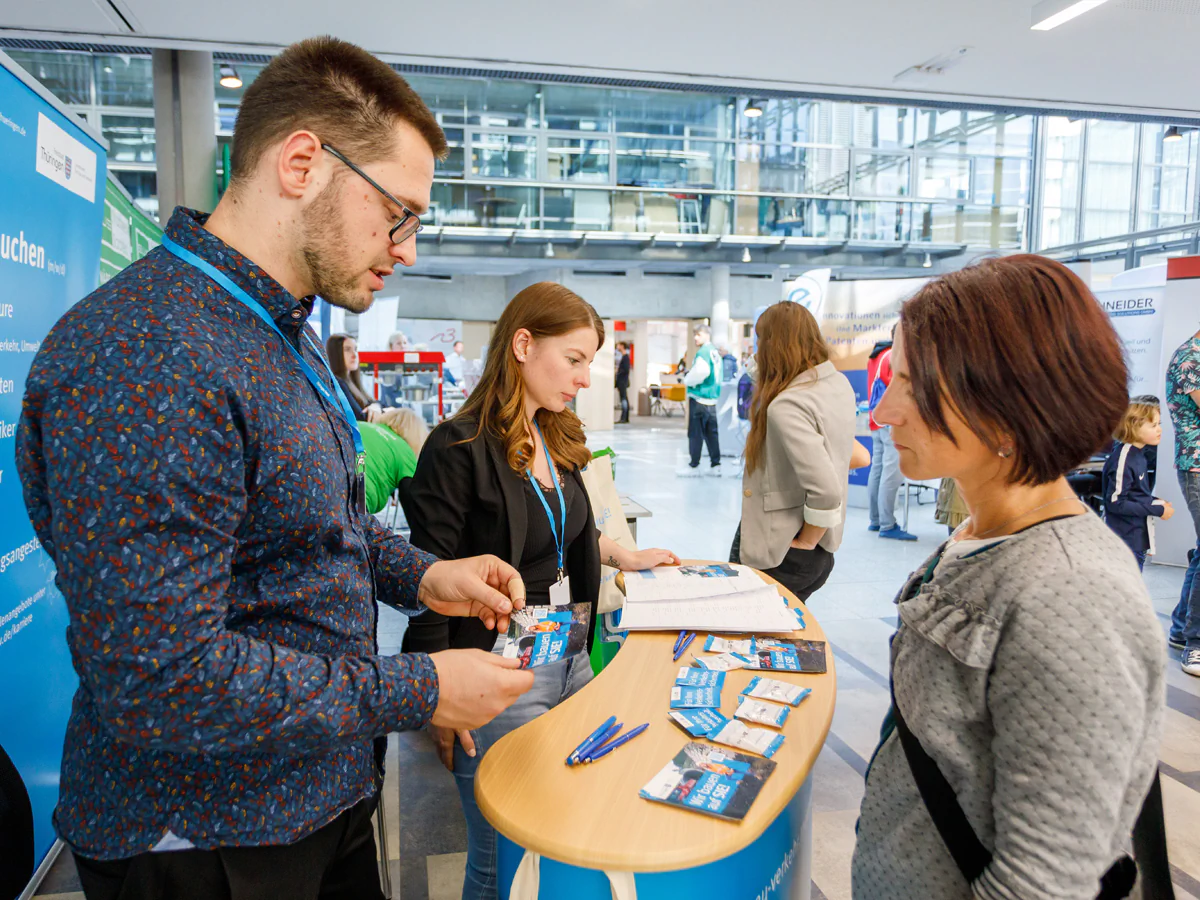
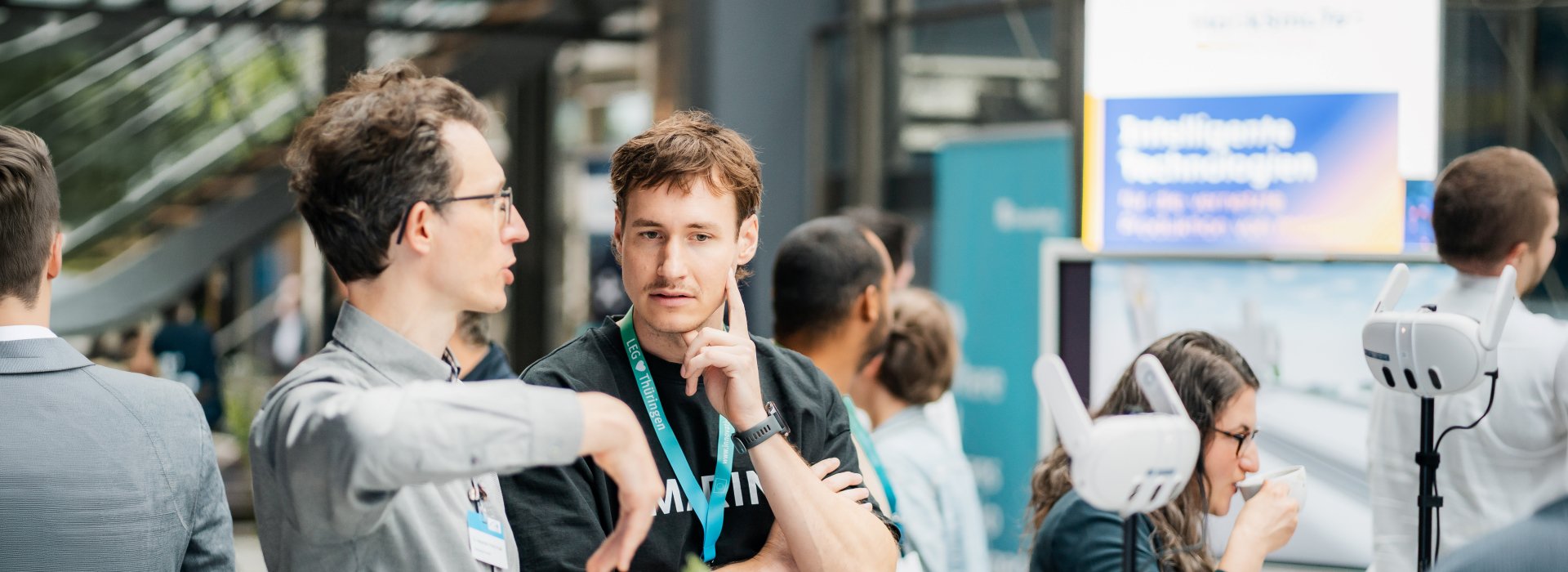
How this can look in practice was demonstrated by the 10th Thuringian Machine Building Day in Erfurt. Under the motto “Autonomization and automation for modern and efficient production“, companies, research institutions and technology providers presented solutions for the factory of tomorrow.
The event thus struck a nerve in the industry. According to the 2026 digitalization survey by the Thuringian Chambers of Industry and Commerce, 30 percent of companies already use artificial intelligence (AI), and a further 25 percent plan to use it in the coming years. At the same time, 83 percent see AI as an important lever for increasing productivity.
The topic is also gaining momentum internationally. According to Fortune Business Insights, the global market volume for industrial automation is expected to grow to more than 632 billion US dollars by 2034. Europe is one of the leading regions in this growth market. According to McKinsey, the greatest growth potential lies in industry-specific applications for industry, energy, mobility and health. Investments in industrial AI applications in Europe in these sectors already rose to 6.8 billion euros in the first half of 2026, equivalent to 44% of the US level. This means a quadrupling since 2018.
Many companies have moved beyond the phase of pure digitalization. The focus is increasingly shifting to systems that not only capture data but also recognize correlations, support decisions, and partially optimize processes independently. Deloitte also sees the future not in individual optimization projects, but in end-to-end AI-supported process chains. According to their 2026 study “AI in Manufacturing“, development is moving from the optimization of individual machine parameters toward systems that detect deviations, analyze causes, provide recommendations for action, and partially adjust processes independently.
It is precisely at this point that Thuringia, with its expertise in optics, photonics, sensor technology, automation and industrial software development, has particularly good prerequisites. The solutions presented take up central goals of the Thuringian Innovation Strategy. They show how the specialization field "Industrial Production and Systems" is implemented with concrete applications for flexible, efficient and future-proof production.
The 10th Mechanical Engineering Day made clear how this development is already reaching companies today. Selected practical examples show the breadth of the solution approaches presented:
When machines recognize their own condition
Fraunhofer IOF presented a clear example. A mobile handheld scanner for AI-supported maintenance processes was introduced. The combination of modern sensors and intelligent image analysis makes it possible to detect damage and wear at an early stage. For companies, this means fewer unplanned downtimes and higher system availability. Especially against the backdrop of a shortage of skilled workers, such systems can help plan maintenance tasks in a more targeted way and use resources more efficiently.
AI supports employees in everyday production
The Wilo Group demonstrated how AI can support employees directly in production. The presented "Smart Production AI Cockpit" automatically bundles production information, open tasks, and deviations for shift handovers. The system is complemented by AI-supported worker assistance. Assembly instructions are flexibly adapted to the employees' level of experience. The goal: make knowledge available more quickly, reduce information loss, and facilitate decisions.
Modular system instead of custom machine construction
Zwerrenz Automatisierungstechnik GmbH presented a particularly practical approach. The basic idea is: “We do not standardize the product. We standardize the automation.” Instead of designing each production facility from scratch, the company relies on reusable modules. This allows various products to be manufactured flexibly via different production routes while the basic framework of the facility remains in place. The concept responds to a trend that occupies many industrial companies: smaller batch sizes, greater product variety, and ever shorter development cycles.
Detect tool wear before costs arise
IMMS GmbH demonstrated with the ZEMOS project how machine learning can be used in industrial practice. Sensors capture vibrations and other process data from tools in CNC machines. On this basis, AI models detect wear conditions and can predict potential failures at an early stage. Such applications are considered particularly promising because they directly contribute to key production metrics such as availability, quality, and cost-effectiveness.
Data as a basis for energy efficiency
While many companies already collect large volumes of operational and energy data, their use often fails due to different interfaces and data silos. solvimus GmbH therefore presented an approach that places the data foundation at the center. Different meter and energy data are aggregated from heterogeneous systems, provided centrally, and visualized. Only then do robust analyses and effective energy management become possible. The central message: anyone who wants to reduce energy consumption in a targeted way first needs transparency about the available data.
New potential in the service business
MARINI and FLYMINT demonstrated that digitalization also enables new business models. Both companies showed how service, customer, and machine data can be used to unlock additional potential in the aftermarket. This is because the greatest growth potential often lies not in the sale of new machines, but in additional services related to already installed systems.
Conclusion
The anniversary edition thus continued a development that has now spanned more than ten years: Together with the Thuringian Center for Mechanical Engineering (ThZM), the Innovativ Thüringen team of LEG Thüringen uses the Mechanical Engineering Day to create a platform on which companies and research institutions can present their solutions, exchange experiences, and initiate new collaborations.
The 10th Thuringian Mechanical Engineering Day impressively demonstrated that many real solutions are already available and illustrate the fundamental change in mechanical engineering. The future does not lie solely in the digitalization of individual work steps. Increasingly, the decisive factor will be the ability to connect data, sensor technology, software, AI, and automation into intelligent, autonomous overall systems. Systems that not only provide information but also recognize contexts, support decisions, and increasingly optimize processes independently.
The machine alone will less often be the unique selling proposition. Differentiation is increasingly arising from AI functions, data models, digital twins, autonomous optimization, predictive maintenance, and software services. Instead of "Our grinding machine is 5% more precise," the statement today is: "Our grinding machine independently optimizes process parameters and reduces scrap by 20%."
The applications presented are exemplary of the numerous approaches discussed at the Thuringian Mechanical Engineering Day. Anyone who would like to learn about current developments, concrete practical examples, and first-hand experiences will once again have a good opportunity at the next Thuringian Mechanical Engineering Day for direct exchange with experts and users.
Impressions


Comments
no comments available
Write a comment
Author