
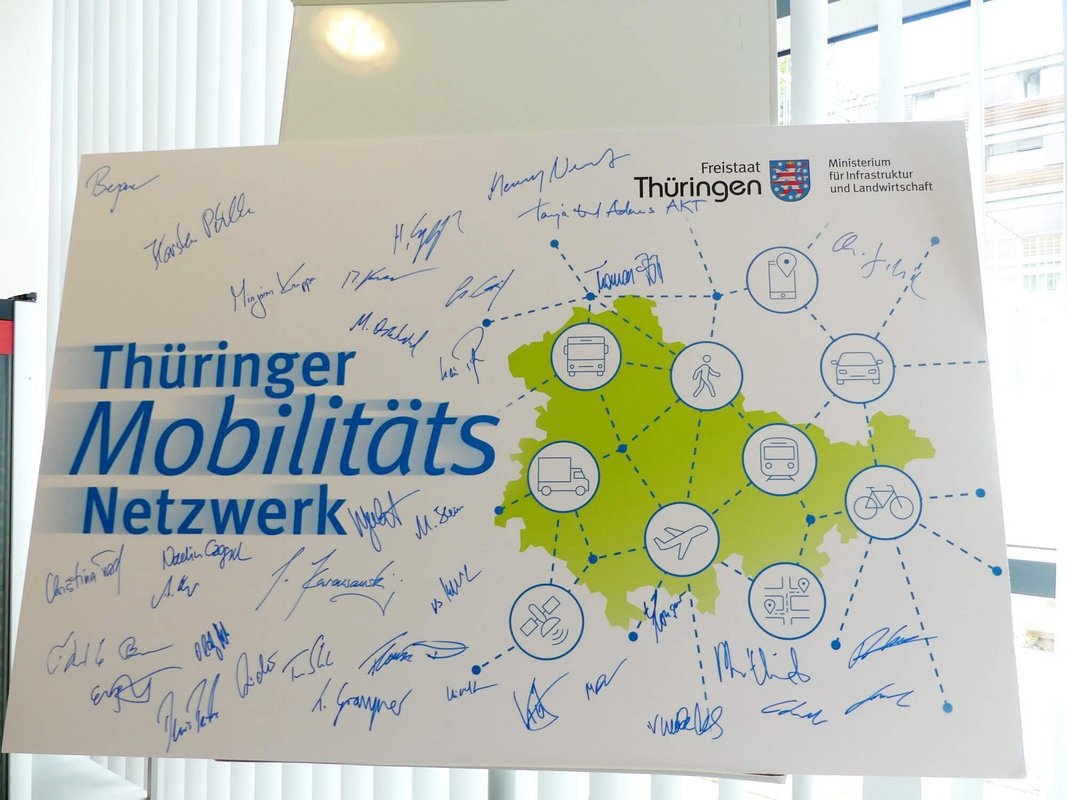
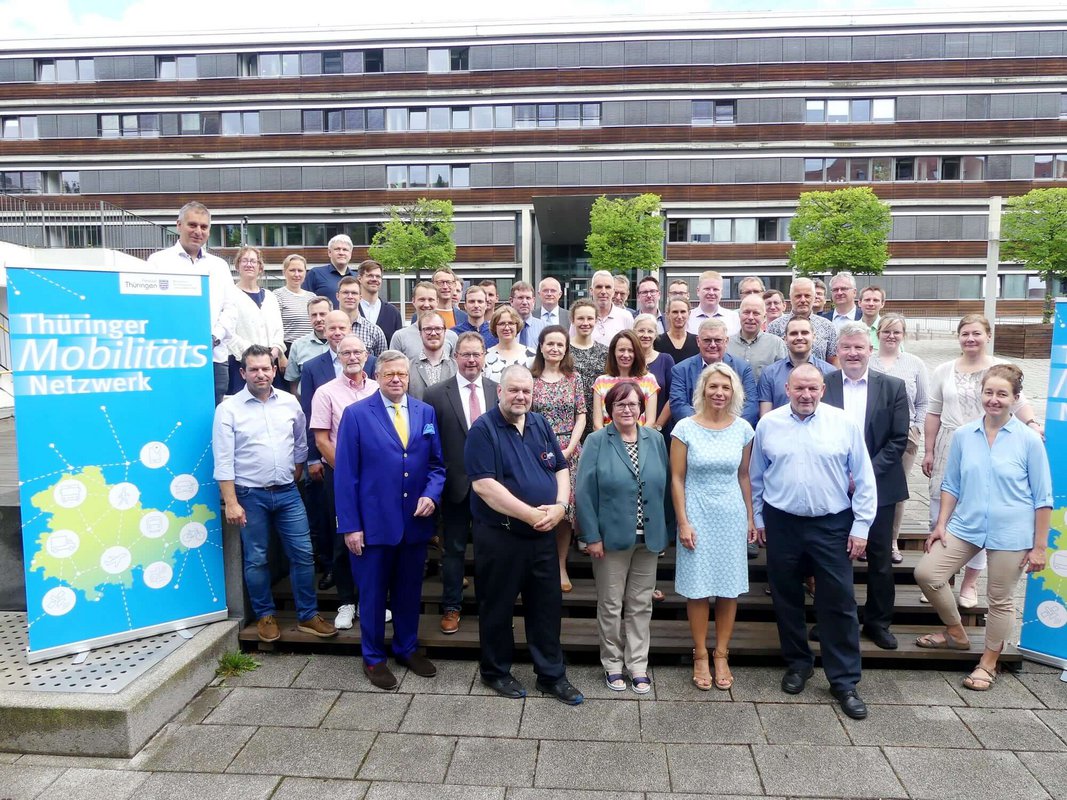
"The mobility network is intended to help make the transport transition in Thuringia socially and spatially equitable. It serves the exchange, communication, and knowledge transfer of the various actors in the transport sector. Given the small-scale municipal and transport structures of our state, it will support us in developing innovative solutions, particularly for mobility in rural areas. For whether the mobility transition succeeds is decided above all in rural areas. Around 80% of people live here, and the vast majority are on the move every day", said Minister Susanna Karawanskij at yesterday's founding event.
The mobility network comprises around 40 experts from various disciplines, including municipal umbrella organizations, business, science, societal interest groups, transport and passenger associations, as well as state politics. In addition to networking, exchange, and knowledge transfer, the network aims to provide strategic impulses for transport policy in the coming years. In doing so, demographic change, climate change, and the changing mobility needs of the population are to be combined with sustainable, efficient, and socially equitable mobility.
Within the Thuringian Mobility Network, four interdisciplinary working groups with different thematic focuses have been established. The working groups deal with the topics of transport infrastructure and mobility in the context of spatial development, further development of rail infrastructure in Thuringia, road-based public transport and an integrated regular-interval timetable, as well as cycling. In addition to these four permanent working groups, there is a temporary expert group that will carry out a campaign to attract skilled workers for companies in the public transport sector.
On the occasion of the founding of the Thuringian Mobility Network, Minister Karawanskij said:
"The Free State of Thuringia faces enormous challenges in the transport sector. In the coming years, federal and state investments in our transport infrastructure must increase significantly. Not only the quality of life of our citizens requires good infrastructure, but also the performance of our economy and science. For this, we need more investments for the maintenance of our road network, projects in the area of rail infrastructure, the expansion of cycling, and more public transport, especially in rural areas."
In light of these challenges, Minister Karawanskij criticized the planned transport budget of the 2025 federal budget. She called for future-proof financing structures for the expansion and modernization of transport infrastructure, for example through special funds or through reforming the debt brake. Debt for sustainable investments in our infrastructure is not a burden for the coming generation, but rather forms the prerequisite for tomorrow's prosperity.
In particular, she criticized: "The planned federal funds for rail infrastructure are nowhere near sufficient given the enormous backlog of renovation and investment. Furthermore, the federal government is cutting regionalization funds instead of significantly increasing them and finally enabling the states to expand local public transport, make it climate-neutral, and double the number of users by 2030. Federal funds for cycling are far from the so-called bicycle billion that we as the Conference of Transport Ministers unanimously called for. And when it comes to the urgently needed, long-term securing of the maintenance of the road network, we still have no idea where things are heading. All in all, this federal budget will not make transport infrastructure fit for the mobility transition."
The attached photos may be used for reporting purposes, provided the source is cited (TMIL / K. Müller).