
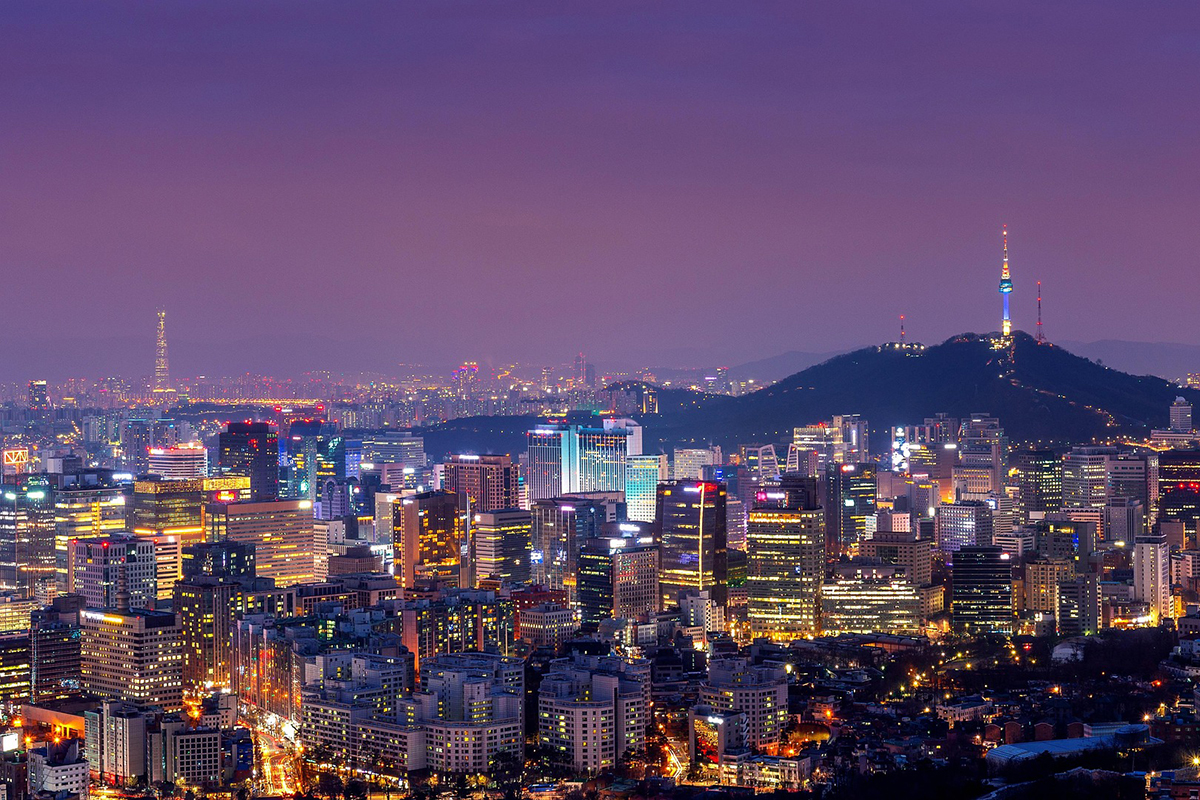
After the Korean War, South Korea initially developed from a poor, war-torn agricultural country with no significant raw material deposits into one of the four tiger states – a group of East and Southeast Asian countries that achieved significant economic progress. Today, with its over 50 million inhabitants, the country is counted among the twenty most important industrialized and emerging countries (G-20) as well as among the so-called “Next Eleven”, the most important emerging economies after the BRICS states, thanks in part to internationally successful corporations such as Samsung, LG and Hyundai.
Especially under South Korean President Park Chung-hee and a state-led economic development, great successes have been achieved since 1961. In the following decades, family-run business conglomerates, the so-called “Chaebol companies”, which to this day shape the economic structure as market leaders in many industries, also played a significant role in the country's economic rise.
Thanks to high investments in research & development, South Korea has established itself as one of the most innovative industrial locations. Particularly technology-intensive areas such as semiconductors, IT components, battery technology, sensor technology and optoelectronics are central growth drivers that have found a firm place in South Korean industrial policy.
The Thuringian business trip to South Korea (September 14 to 18) ties in exactly here: In cooperation with Germany Trade and Invest (GTAI), a further intensification of bilateral business relations is being promoted as part of a so-called cluster marketing trip for optoelectronics. You can find more information about the trip on the Event website.