
Currently, intern Sofia Orefice is strengthening the Thuringia International team in the Department of Economic Development. With her Italian background, she complements the team with valuable insights and supports, among other things, projects related to Northern Italy. This also includes the creation of this article:
„Diamo uno sguardo più da vicino all‘Italia.“ – Werfen wir einen genaueren Blick auf Italien:
The cooperation between Germany and Italy recently came into the media spotlight through the government consultations between Chancellor Friedrich Merz and Prime Minister Giorgia Meloni. As the third-largest economy in Europe, Italy as an industrial location plays a central role in the European single market. For this year, the International Monetary Fund (IMF) forecasts GDP growth of just under one percent, the unemployment rate has recently developed unexpectedly favorably, and for the first time in 23 years, the country was upgraded by the rating agency Moody's at the end of 2025. The Olympic Games also gave the economy noticeable momentum.
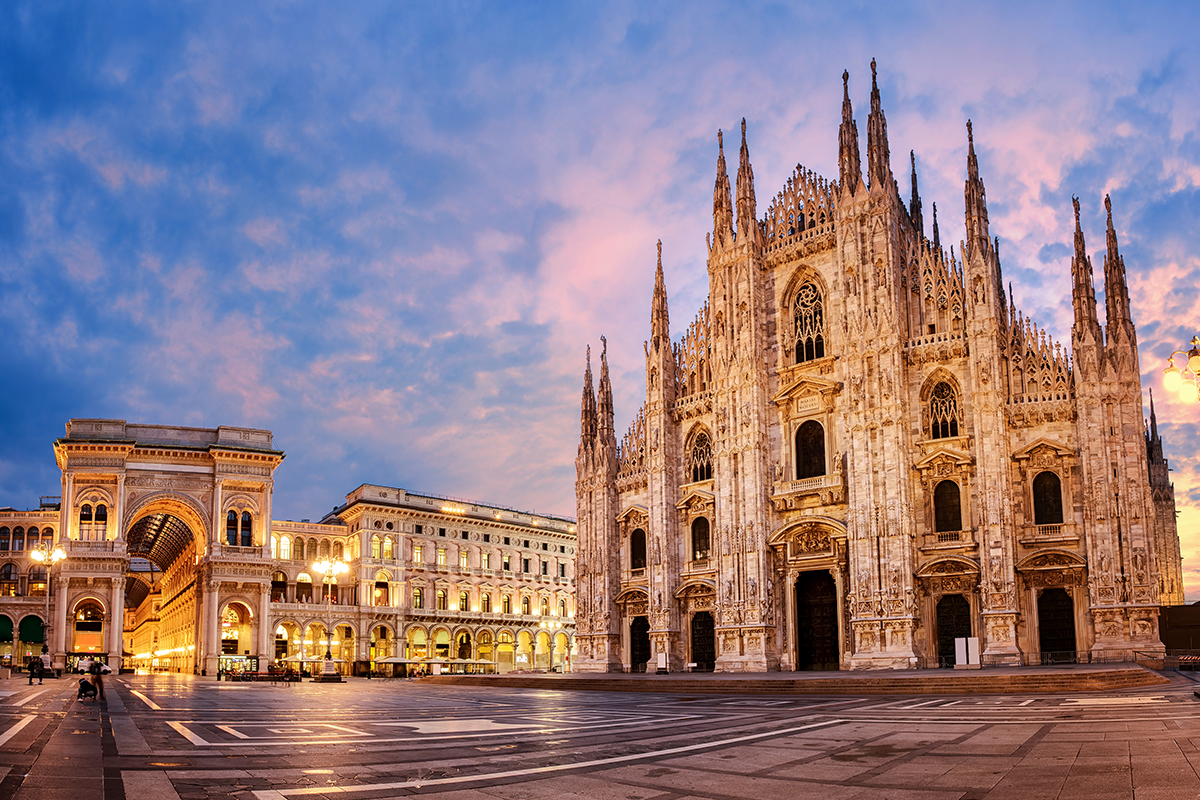
Northern Italy is considered the industrial heart of the country. Bolstered by major financial and service centers such as Milan and Bergamo, the Lombardy region alone accounts for 22 percent of Italy's economic output. The region is characterized by a dense research landscape and is regarded as a hub for international trade across the Alps and the significant seaports in Genoa and Trieste. In the Emilia-Romagna region, the world-famous “Motor Valley” is located in the triangle between Modena, Bologna, and Parma, with the headquarters of Ferrari, Lamborghini, Maserati, Ducati, and Dallara. However, it has long been about more than just sports cars here, increasingly focusing on an internationally competitive ecosystem of highly specialized suppliers, engineering service providers, and mechanical engineers. Accordingly, transformation processes similar to those in Thuringia are shaping the current economic development of this region.
A tangible example of this is the “e-building” opened by Ferrari in 2024 in Maranello, where combustion engines, hybrid drives, and electronic components are manufactured. Furthermore, the increasing number of initiatives in the European defense industry shows that industrial transformation also concerns resilience and security-relevant capabilities.
Italian and Thuringian companies face similar problems, particularly with regard to the shortage of skilled workers, high energy prices, supply uncertainties and competitiveness. The parallels in the challenges motivate us to further strengthen the existing bilateral networks and create new points of contact. To this end, a business trip to Northern Italy for the automotive industry is currently being considered.