
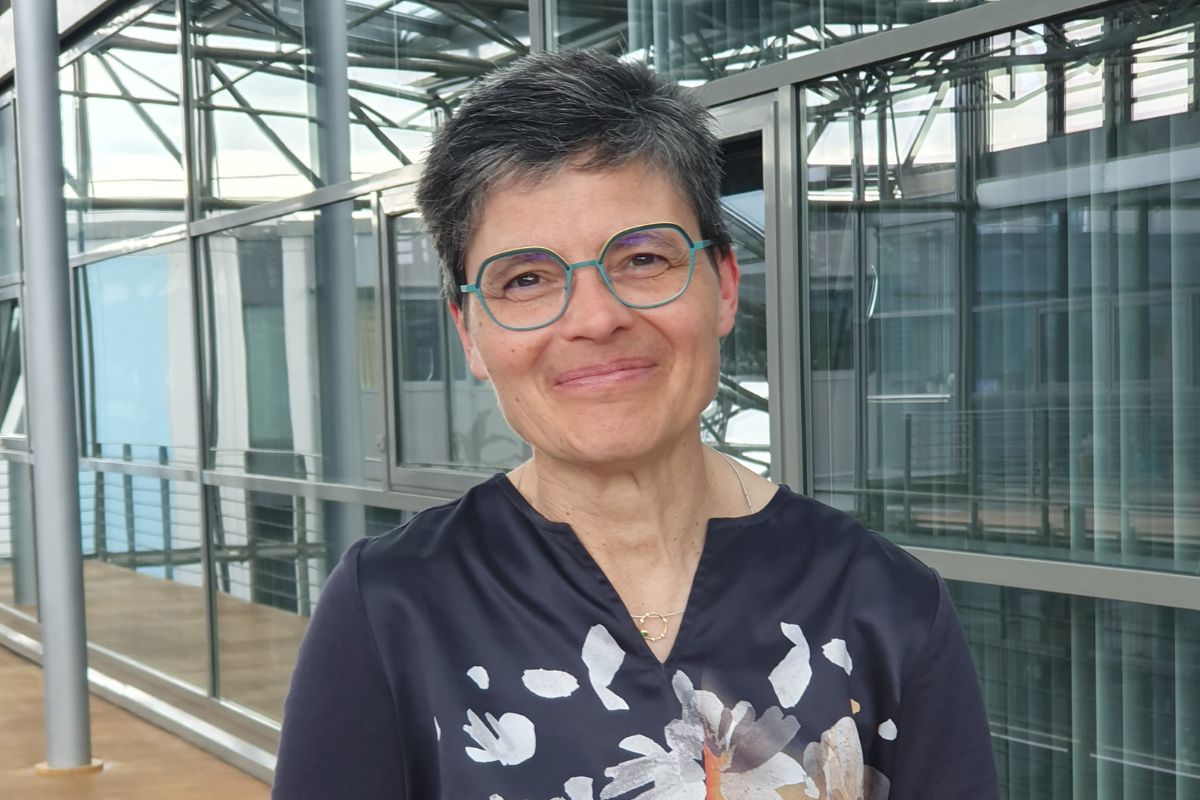
Hello Ms. Martens, you are the project manager in the Invest team for the life sciences industry. Life Sciences – that's almost a buzzword. What significance does this industry have for Thuringia?
So, under Life Sciences we combine the fields of medical technology, biotechnology, and pharmaceuticals. On the one hand, we have a truly long tradition to build upon. I think of developments such as the industrial production of microscopes and X-ray tubes, or even penicillin, which was first produced on an industrial scale in continental Europe in Jena. Today, we have over 600 companies and 30,000 employees in this sector. Thuringian companies are innovation leaders in the fields of microscopy, laser technology, and ophthalmology. In the field of biotechnology, companies developing lab-on-a-chip or organ-on-a-chip systems have successfully established themselves. At the same time, Thuringia attracts cutting-edge research in the field of diagnostics and therapy of infections such as sepsis or antimicrobial resistance. For instance, the federal government is funding the Leibniz Center for Photonics in Infection Research with over €120 million.
What do you say to an investor or company interested in Thuringia? What are the unique selling points?
I am truly convinced that the outstanding competencies that Thuringia has in the field of optics and photonics, and which are the key to new procedures, therapies, and innovations in the life sciences, are a strong unique selling point for us. Today, this is summarized under the term “biophotonics”. In addition, we have an excellent research infrastructure, many extremely innovative SMEs, but also major players such as ZEISS, Abbott, Bauerfeind… And as a small federal state – everything in a very confined space, which also means wonderful opportunities for cooperation and exchange on very short paths. “Innovation ecosystem” is indeed the magic word for this today. In Thuringia, this really works and is supported by dedicated industry clusters such as medways, the InfectoGnostics Research Campus, and OptoNet.
And what are your biggest challenges?
In addition to the Life Sciences sector, I am also responsible for investors from the Western Europe region and travel abroad frequently. Therefore, I know that the international, as well as national, competition is very intense. One of my major challenges is therefore first and foremost location marketing – putting Thuringia on the map for potential investors. Because, yes, we have real USPs, but we must still highlight them more actively and confidently - even as the Free State of Thuringia. In addition, in the Life Sciences sector, there are often no large investments on a "greenfield site,“ but rather many projects arise from spin-offs or from existing operations, which requires a great deal of perseverance. However, this also means that we must continue to work on providing and developing attractive laboratory and production spaces for companies. Another "tough nut to crack“ is the still difficult financing conditions, especially for scale-ups, i.e., when companies are working on often lengthy approvals and market launches.
Concretely, what services do you offer companies?
Yes, as already mentioned: We are looking for suitable locations, advising on funding opportunities, and supporting the search for financing options. However, we also see ourselves as a "door opener“ to partners from industry and research in Thuringia. For this purpose, we have developed LiST – the Life Sciences Portal Thuringia (www.lifesciences-thueringen.de). Feel free to take a look.