
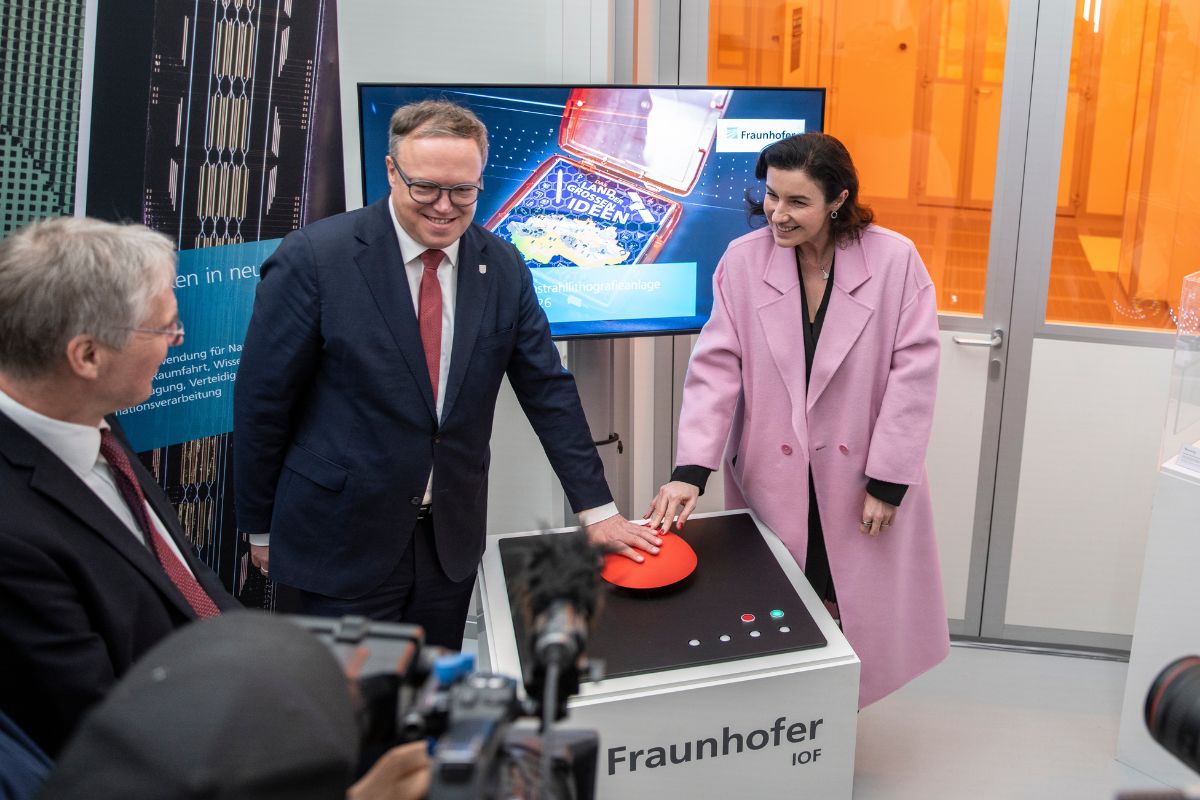
In early March, Thuringia was the focus of federal research policy: Federal Research Minister Dorothee Bär made her inaugural visit to Thuringia and, together with Thuringia's Minister President Mario Voigt, informed herself at the Fraunhofer Institutes IKTS and IOF about current research work and innovation projects “Made in Thuringia”.
The focus was on the inauguration of the new research building at the Fraunhofer Institute for Applied Optics and Precision Engineering IOF in Jena. The extension building is to house new laboratories, machines for high-tech research, clean rooms and offices. This also includes a new electron beam lithography system for the production of photonic components as well as a ground station for satellite-based quantum communication. This is already the third extension building of the institute, the costs of which amount to approx. 30 million euros; half each came from the federal government and the state.
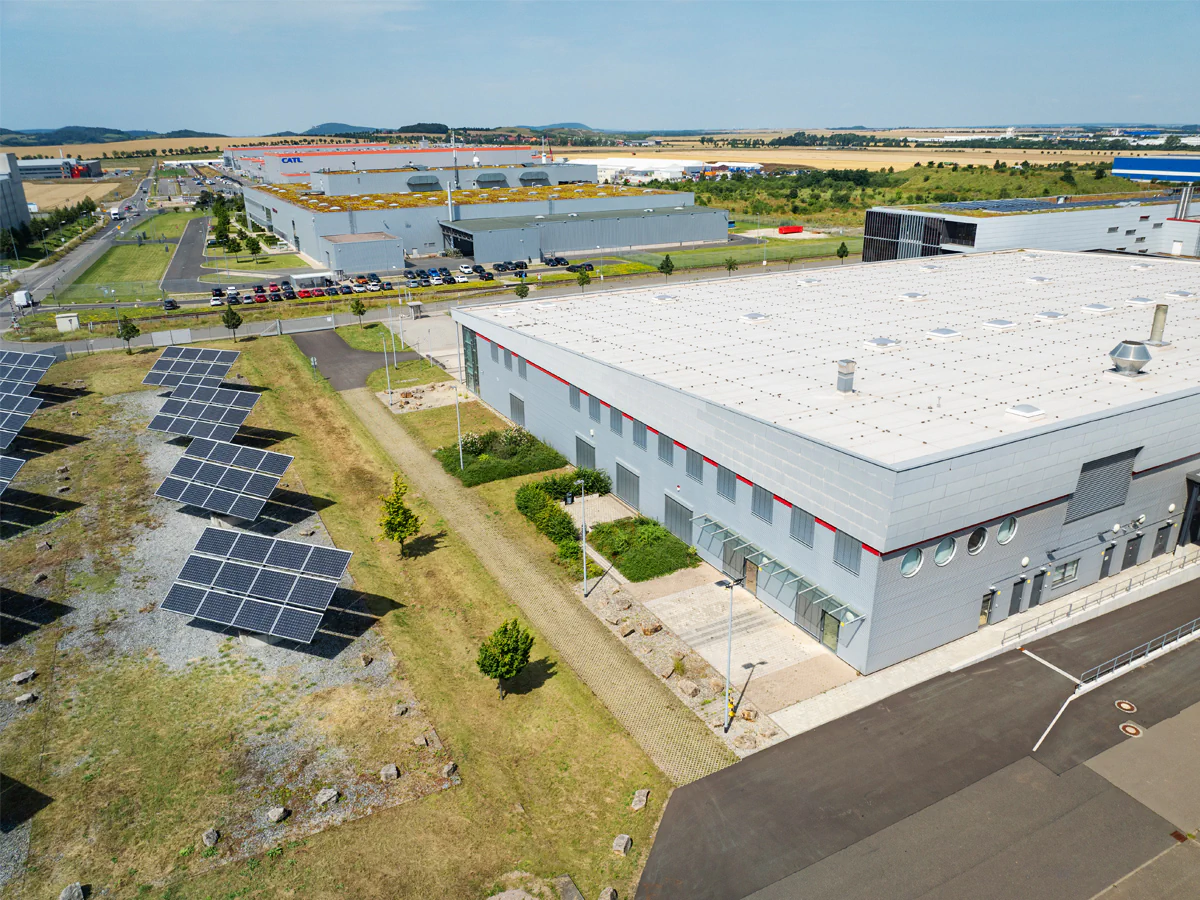
At the Fraunhofer IKTS (Institute for Ceramic Technologies and Systems) in Hermsdorf, Minister Bär informed herself about current developments and strategic initiatives in the field of energy and environmental technology. The institute uses ceramic components in many areas of plant engineering: for the production of hydrogen and the separation of carbon dioxide, for the synthesis of platform chemicals and e-fuels, in large stationary batteries for power grids, or for keeping water clean for the population and industry. The region around the Fraunhofer IKTS site in Hermsdorf is one of the world's leading clusters for these ceramic technologies.
Here, too, the minister was impressed: “The competencies here at Fraunhofer IKTS, which the institute has built up with industry in recent years, are an important building block for Germany's competitiveness. The electricity storage, CCU and water technologies made from ceramic materials not only contribute to Germany's resilience and technological sovereignty, they can also become international export hits.“