
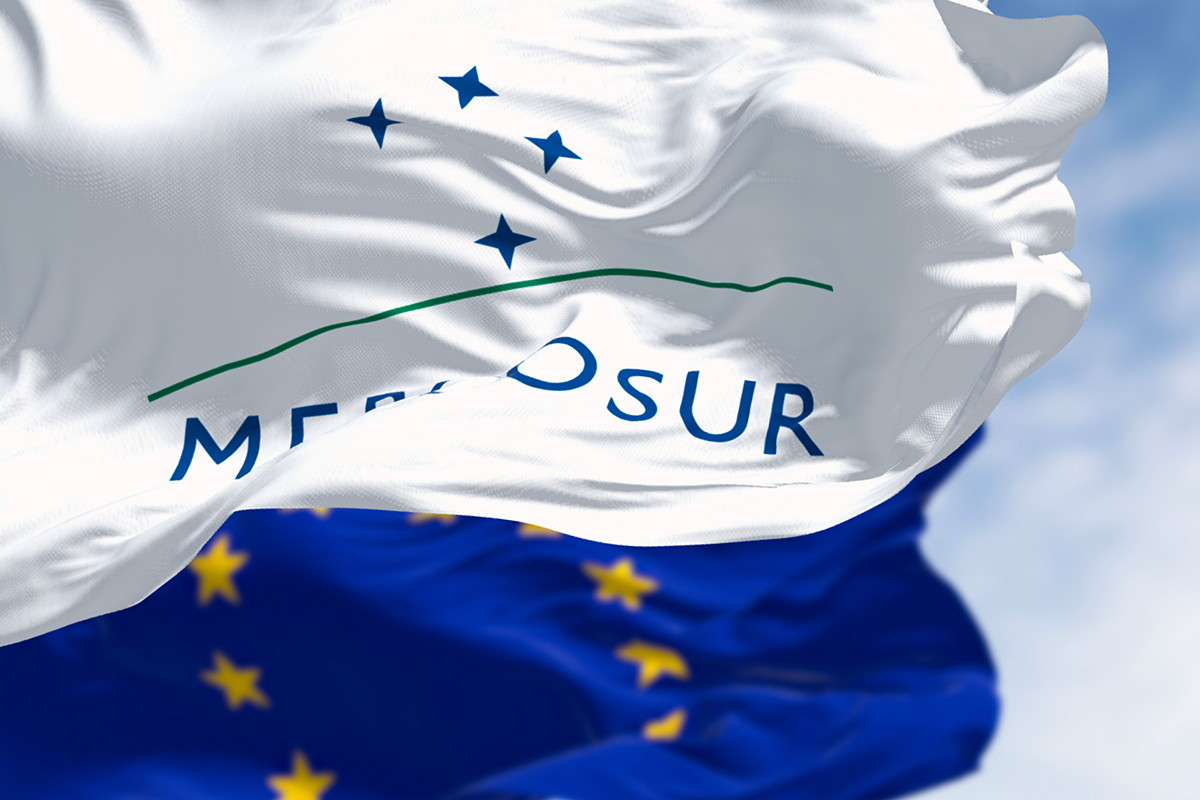
The four South American states Brazil, Argentina, Uruguay, and Paraguay together form the Mercado Común del Sur (Mercosur), a customs union that has been promoting economic exchange and integration in South America since 1991.
The agreement between the EU and Mercosur is intended to create the world's largest free trade zone, encompassing more than 700 million consumers. According to the Austrian Federal Economic Chamber, European exports to the region are expected to increase by up to 39%, with agricultural and food exports to the Mercosur states even expected to rise by nearly 50%. The implementation of the free trade agreement is also expected to create over 440,000 new jobs in Europe. For German and European exporters, market access in the machinery and automotive sectors will bring particular advantages.
On December 6, 2024, the fully negotiated agreement was signed by Ursula von der Leyen and the heads of state of the Mercosur countries. The ratification process is currently underway: for this purpose, the EU Commission has divided the association agreement into two parts, a trade part and a political part. The provisional application of the trade part is expected in 2026 or 2027. Without such an agreement, Europe risks falling behind in competition with China and the USA.
But even without full ratification, there are already numerous business opportunities for German companies wishing to tap into this market. To this end, we conducted an interview with two experts from Argentina and Brazil, which we are pleased to share with you in the following article.