
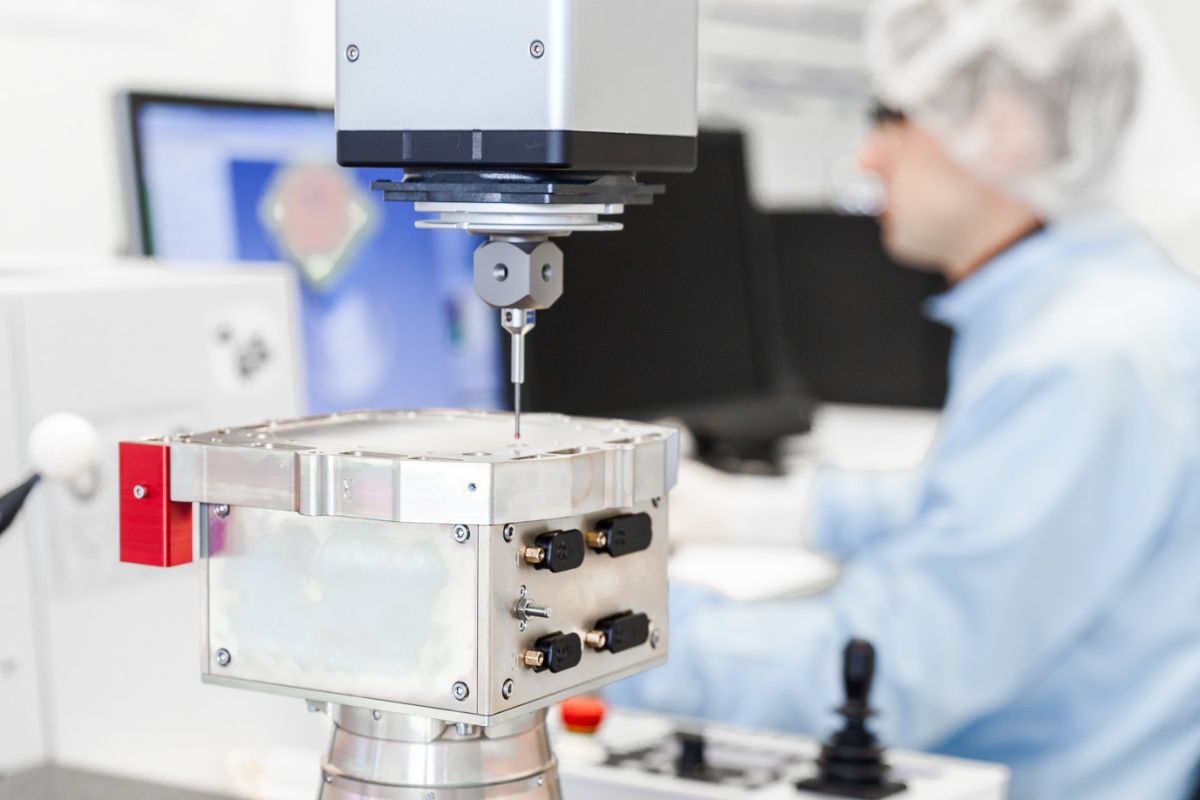
It was the first manned lunar mission since 1972, which launched on April 1. Three men and one woman lifted off with a carrier rocket to orbit the moon and test navigation, communication, and life support under real conditions for ten days. This would not be possible without the outstanding technology from Thuringia. A central component for successful navigation – the so-called star sensor – comes from Jena. The sensor is based on high-precision optics and image processing and enables reliable orientation even under extreme conditions in space. The recognition of constellations allows for the exact alignment of the space capsule. At the company Jena-Optronik, which develops and produces the star sensor, Minister President Mario Voigt was able to witness the launch live on screen and emphasized: “Our engineers are doing top-notch work that is in demand worldwide and now directly from NASA.“
The Artemis program is thus not only a major scientific project, but also a driver for the economic and technology location of Thuringia. The close interlinking of research institutions and innovative SMEs strengthens international visibility, creates high-quality jobs, and opens up new markets – from space applications to terrestrial spin-offs. Thuringia shows: top expertise from the region can help shape lunar history.
With the Artemis program, NASA, together with international partners, is advancing the sustainable return of humans to the Moon. The recent milestones – from the successful test of the heavy-lift rocket SLS to progress on the Orion spacecraft and the construction of the lunar space station Gateway – mark the transition from testing to the operational phase. Europe's contribution via ESA is central – and with it, the participation of German and Thuringian companies along the value chain.